
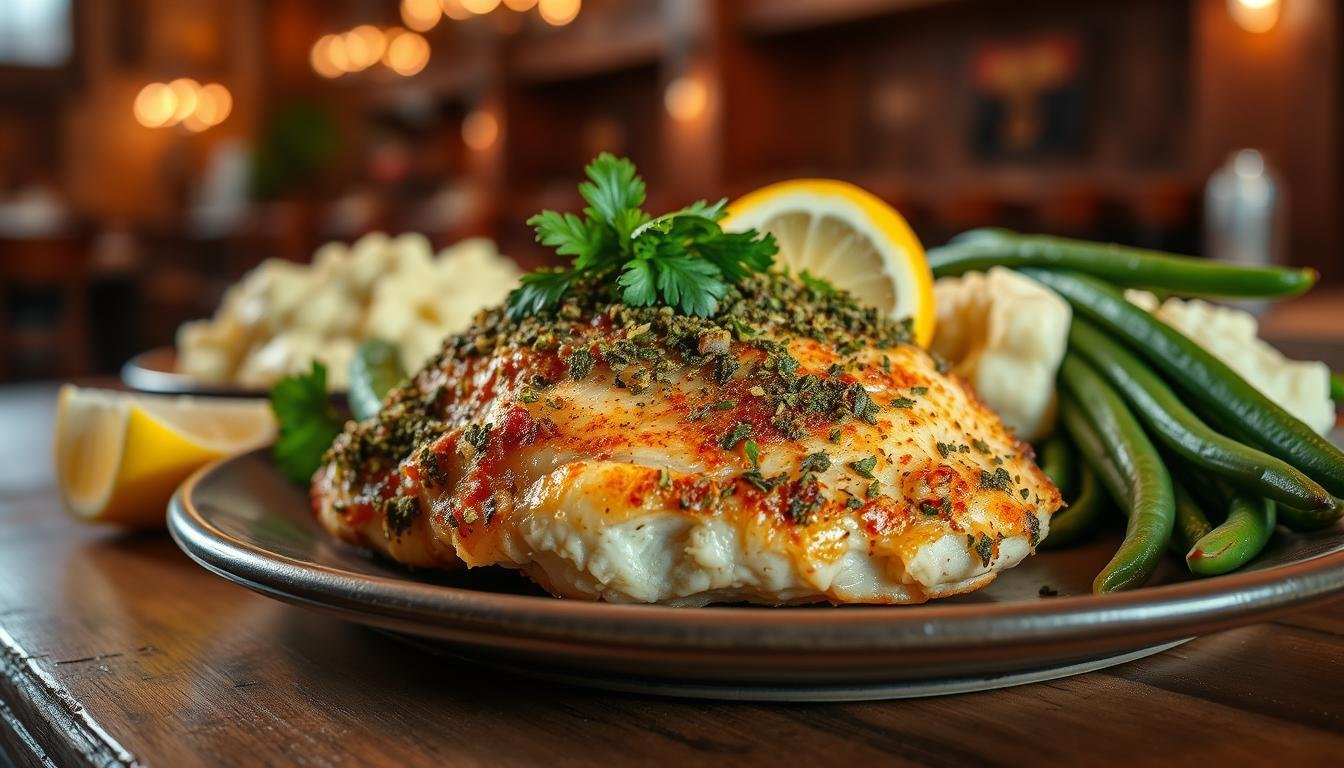
Can a simple meal recreate a full restaurant experience without leaving your kitchen? I’ve been perfecting copycat recipes for years, and this one is a standout.
I am thrilled to share my favorite way to prepare texas roadhouse herb crusted chicken right in the comfort of your own home. This copycat recipe captures the exact flavor profile of the restaurant version while costing far less.
This herb crusted chicken is lighter than red meat and makes a weeknight dinner feel special. I promise it’s easy to make and rewarding to eat.
Over time I’ve refined my recipes so they deliver consistent results. My goal is to help you master this crusted chicken recipe and enjoy a pro-level meal without the bill.
Key Takeaways
- This copycat recipe recreates the restaurant flavor at home.
- It’s an easy, family-friendly chicken recipe for busy nights.
- Healthier than many red meat options while still hearty.
- I share tested steps so you can cook like a pro.
- Perfect for fans of copycat recipes seeking restaurant taste.
Why I Love Making Texas Roadhouse Herb Crusted Chicken at Home
Recreating a beloved menu item in my home kitchen makes dinner feel special and doable.
I cook at home about 90% of the time, so turning a simple restaurant favorite into a weeknight meal matters. This herb crusted chicken copycat recipe is quicker and less fussy than many of my past attempts. It gives the same satisfying crunch and flavor without a long ingredient list.
I value control over ingredients and portion sizes, and this crusted chicken recipe helps me do that. It also saves money while delivering a quality meal my family enjoys. Preparing it becomes a shared task—kids help with light duties and we talk while the pan does the work.
- Versatile: pairs with almost any side.
- Efficient: faster than other copycat recipes I’ve tested.
- Reliable: a staple in my weekly meal plan.
Essential Ingredients for the Perfect Herb Crust
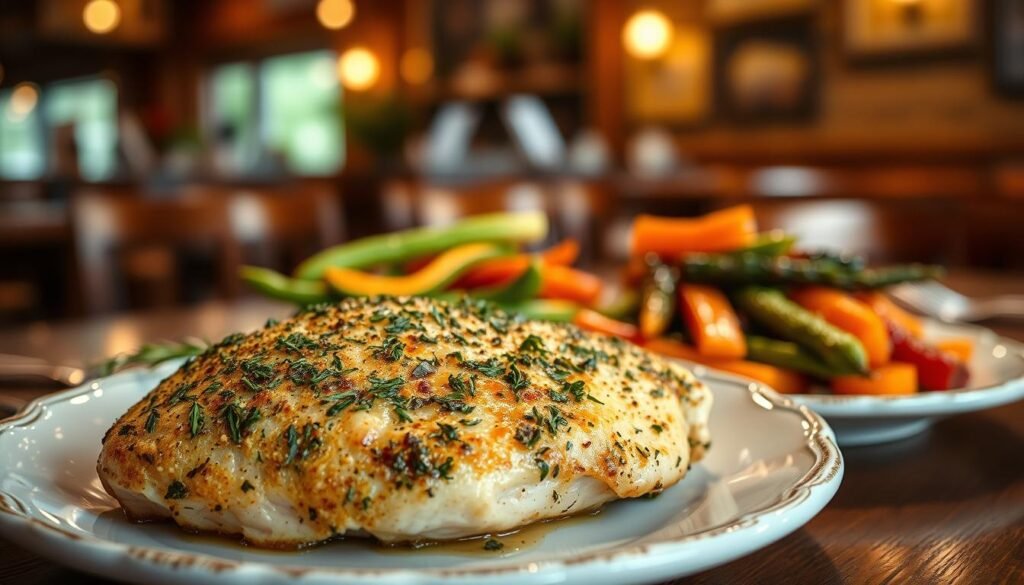
Start with well-chosen pantry ingredients and you’ll set the stage for an unbeatable crust.
I use four boneless, skinless chicken breasts so the meal feeds four without fuss. Quality matters: buy fresh breasts and pat them dry before seasoning.
The Role of Dried Herbs
Dried herbs like dill, basil, and oregano simplify prep and hold concentrated flavor. They make this herb crusted approach fast and reliable for weeknights.
I keep garlic powder, paprika, kosher salt, and black pepper on standby to build depth. These spices pair with a squeeze of lemon to brighten each bite.
- Use extra virgin olive oil to bind the coating and promote a golden sear.
- Mix dried dill, basil, and oregano for an aromatic base.
- Have garlic powder, paprika, salt, and pepper ready to balance the flavors.
- Fresh lemon adds acidity that lifts the crusted coating.
- Stocking these ingredients means you can make this recipe any time the craving hits.
Preparing Your Chicken Breasts for Even Cooking
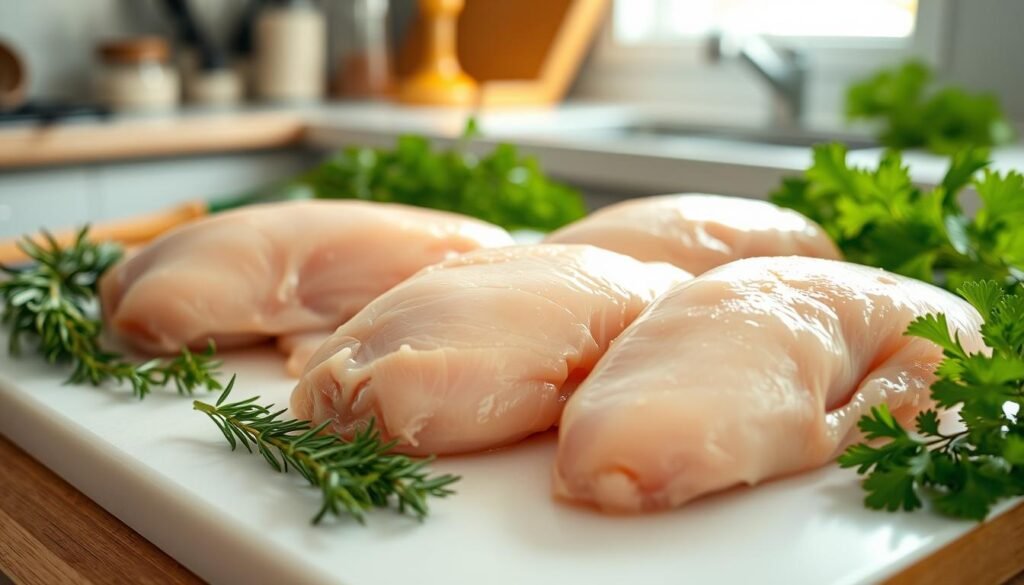
Start by getting each breast to an even thickness so every piece finishes at the same time. I usually begin with four boneless, skinless chicken breasts, or I cut two thick breasts crosswise to make four thin cutlets.
Butterflying Techniques
When I butterfly a breast, I lay it flat and slice horizontally, leaving a small hinge. I open it like a book so the pieces cook in the same amount of time. This method keeps the interior juicy and speeds up overall cooking.
Using a Meat Mallet
I always cover the breasts with plastic wrap before using a meat mallet. That prevents splatter and cross-contamination. A few firm, even taps tenderize the meat and help seasonings stick.
- I use plastic wrap to protect my counter and tools.
- Pounding with a meat mallet cuts cooking time to just a few minutes per side in a hot skillet.
- Uniform pieces ensure an even, flavorful herb crusted finish on every cutlet.
Mastering the Herb Seasoning Blend
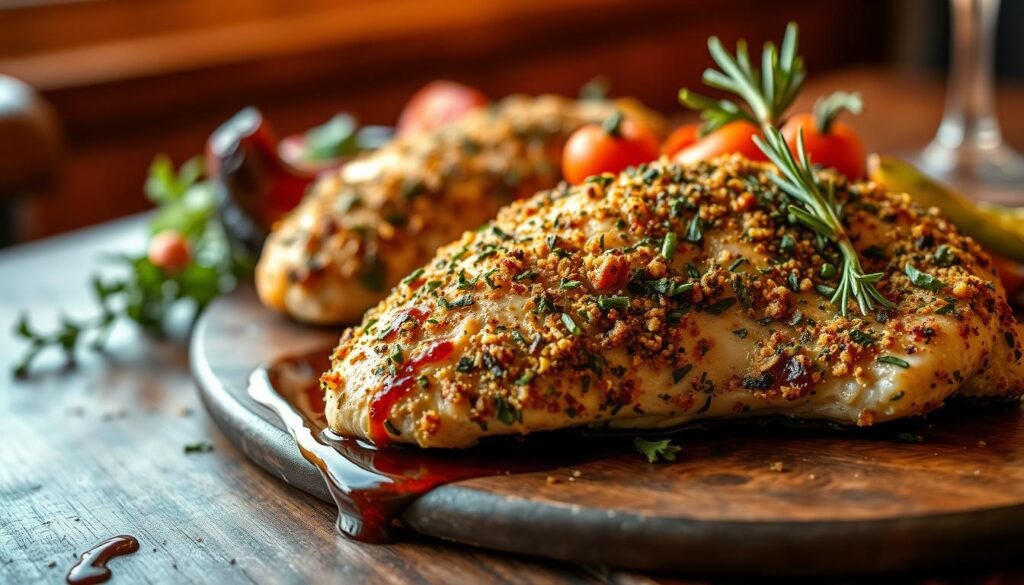
My go-to seasoning starts with a simple bowl and a handful of reliable dried spices.
“Mix well so every bite gets the same bright, savory finish.”
I make a signature roadhouse herb blend by combining dried dill, basil, oregano, garlic powder, and paprika in a small bowl. Mix until the colors and aromas look uniform. This ensures even distribution on the chicken breasts.
- Use high-quality dried herbs for better concentration of flavor.
- Adjust garlic and paprika to taste for milder or bolder spice.
- Coat each piece thoroughly so the crust forms while searing.
Allow the seasoned meat to rest in the fridge for at least 30 minutes and up to 24 hours. This step lets the spices penetrate and improves overall flavor. Trust me—those extra minutes make the final crust and texture noticeably better.
Choosing the Right Skillet for Your Dish
A good pan is the unsung hero of a reliably golden crust.
I rely on cookware that balances heat control and a nonstick surface. For this recipe I use Hexclad because it blends stainless steel performance with a nonstick finish.
This matters when you coat the chicken in a delicate herb crusted mix. A poor surface can tear the coating when you flip the pieces.
Benefits of Nonstick Cookware
A nonstick skillet helps the crust release cleanly. I heat a little olive oil over medium-high heat so the exterior browns fast without sticking.
- Enough surface area: avoid overcrowding so each piece cooks evenly.
- Easy flipping: nonstick pans keep the crust intact when you turn the meat.
- Consistent sear: good cookware holds temperature for perfect browning.
- Cook all at once: a large skillet saves time and keeps plates synchronized.
“Proper cookware is an investment that makes every cooking task more successful.”
In short, choose a skillet that stays hot, releases well, and fits your portions. For me, that choice improves every step of making this crusted chicken dish.
How to Cook Texas Roadhouse Herb Crusted Chicken
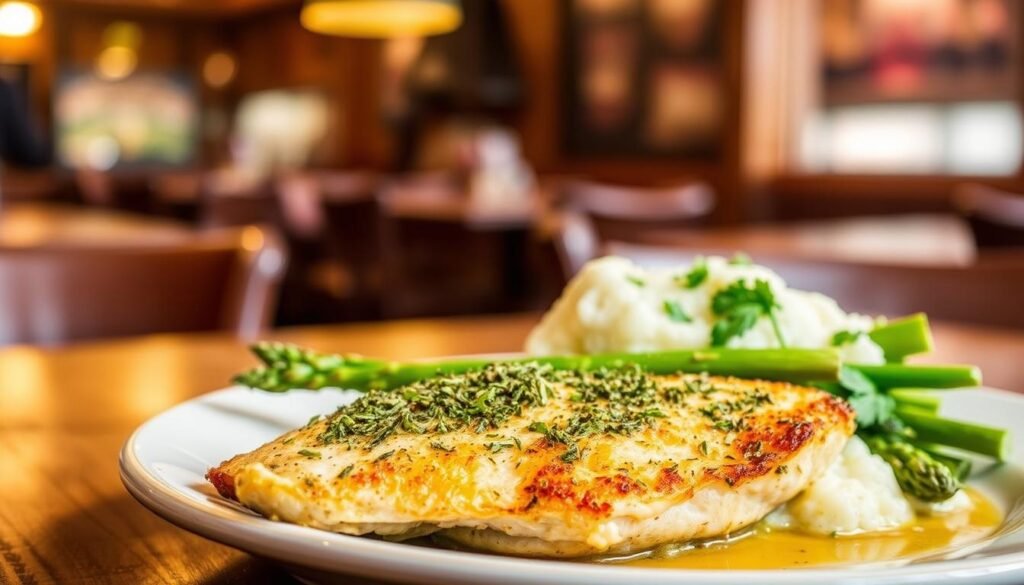
I heat a large skillet until the oil shimmers, because a proper sear begins with the right pan temperature. I use a tablespoon or two of olive oil over medium-high heat so the surface gets hot but not smoking.
Next, I place the seasoned chicken breasts in the pan and let them sear undisturbed for 5 minutes. This initial time builds the golden crust that defines the dish.
I use tongs to flip each piece carefully, keeping the coating intact. After flipping, I cook for another 5 minutes until both sides are evenly browned and the breasts reach doneness.
During the last few minutes I add lemon wedges to the skillet. The fruit caramelizes and lends bright flavor.
“Sear long enough to form a firm crust, but keep the heat steady so the interior stays juicy.”
When the cutlets are done, I squeeze the roasted lemon over the top before serving. This simple technique makes the copycat recipe sing and pairs well with any side.
- Heat oil until shimmery, not smoking.
- Sear 5 minutes per side for a golden finish.
- Add and squeeze lemon at the end for bright flavor.
Tips for Achieving the Perfect Golden Crust
The secret to an even, golden coating is simple: patience and careful heat management. I focus on steady temperatures so the coating browns without burning the dried spices or tearing the surface.
Managing Heat Levels
I avoid flashing flames. Start with medium-high heat to sear, then drop to medium or medium-low so the crust develops slowly. Too much heat browns the outside in minutes while the interior stays underdone.
Use enough oil to coat the skillet and keep pieces from sticking. If smoke rises quickly, lower the heat and give the pan a moment to stabilize.
Checking Internal Temperature
I always use a digital meat thermometer. Check the thickest part of the chicken breast and pull the meat at an internal temperature of 165 degrees Fahrenheit.
Placing lemon wedges on top or in the pan during the last minutes adds flavor as the crust finishes. Patience at this stage pays off in texture and safety.
- Manage heat to avoid burning dried seasoning.
- Check internal temperature at the thickest point: 165°F.
- Finish with lemon on top for bright flavor during the last minutes.
“A steady pan and a reliable thermometer are the two tools I never skip.”
Creative Variations to Customize Your Meal
Small tweaks to the coating can turn this familiar recipe into something new every week.
I often add a tablespoon of grated parmesan to the herb mix for a richer, savory finish that pairs well with a squeeze of lemon.
For heat, a pinch of red pepper flakes or a dash of cayenne brightens the crust without overpowering the garlic notes. Start light and taste as you go.
- I like testing rosemary or thyme to change the flavor profile for family dinners.
- Adapt the blend to fish fillets or pork chops if you want extra protein.
- Serve the cutlets over quinoa or rice to make the meal pull together with healthy sides.
- Add a pinch of chili powder for spicy lovers, or mix fresh herbs with dried for brighter aroma.
“A little cheese or spice goes a long way in making the dish feel new.”
These swaps take minutes to prepare and use the same pan, oil, and basic technique. Try one change at a time so you learn which spices and herbs you prefer.
Serving Suggestions and Side Dish Pairings
Pairing the right vegetables and starches makes the plate feel balanced and finished. I like sides that either brighten the savory profile or soak up the pan juices from the cutlets.
Healthy Vegetable Sides
Fresh green beans work beautifully with this herb crusted cutlet. I sauté them briefly in olive oil and a little garlic so they stay crisp and bright.
- I love serving this with sautéed green beans because their freshness complements the savory crust on the breasts.
- For a fuller plate, cilantro-lime rice or charro beans pair well and absorb any lemon and oil left on the pan.
- A light garden salad or roasted vegetable medley adds color and balances the spices and herbs in the dish.
- For comfort style, creamy mashed potatoes or crispy potato wedges make the meal hearty and classic.
- Drizzle a lemon butter sauce on top to elevate the flavors and give a restaurant-quality finish in minutes.
“Simple sides highlight the spices and keep the meal balanced.”
I find these pairings turn a copycat recipe into a complete plate everyone at the table enjoys.
Storing and Reheating Your Leftovers
Leftovers can taste nearly as good as the first meal when stored and reheated correctly.
I let the cutlets cool to room temperature before wrapping or placing them in an airtight container. This step keeps condensation low and preserves the herb crusted chicken flavor.
Refrigeration: Store cooked chicken breasts for 3–4 days in the fridge. Use an airtight container to prevent other odors from altering the crust and to keep the protein fresh.
- I always wait until the meat is cool, then seal it to maintain texture and safety.
- Slice cold breasts for salads or wraps to add quick protein to lunches and sides.
- When reheating, warm a little olive oil in a skillet over medium heat so the pan and oil help the crust regain crispiness—about a few minutes per side.
- Use a thermometer to confirm safe internal temperature after reheating, and serve with a squeeze of lemon to brighten the plate.
“Proper storage and a quick skillet reheat keep leftovers tasting intentional, not leftover.”
Conclusion
To close, let me summarize how a few reliable methods make this copycat dinner both easy and tasty.
Making Texas Roadhouse herb crusted chicken at home saves money and delivers a near-restaurant result. With about 15 minutes of prep and 25 minutes of cooking, you can serve a weeknight favorite that feels special.
Always use a meat thermometer and pull the pieces at an internal temperature of 165°F for safety. This recipe is versatile and healthy, and it works well with simple sides.
I hope you enjoy this chicken recipe and feel confident sharing it. Thanks for following the guide—please leave a note on how your crust turns out.
