
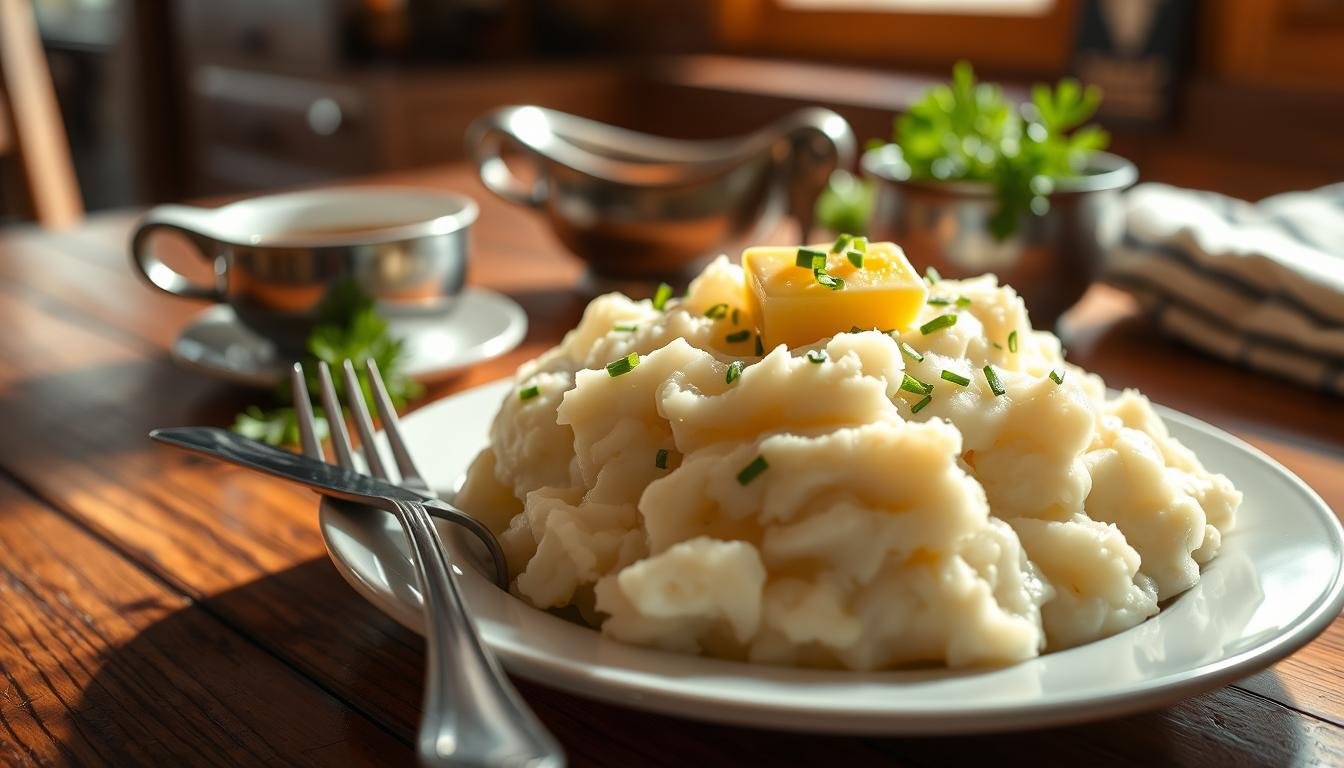
Can a humble side dish outshine the main course without a heavy pour of gravy?
I’m Jessie Thompson, and I want to show you how to make texas roadhouse mashed potatoes that taste restaurant‑rich but are simple to prepare at home. I developed this mashed potatoes recipe to add extra creaminess and seasoning so the dish stands on its own.
I believe great potatoes should be flavorful enough to shine without being covered up. My easy recipe uses garlic, butter, and cream to create a silky texture that beats the classic roadhouse mashed potatoes version.
Save this recipe pin to your board and use these tips for holidays or weeknight dinners. Follow my step‑by‑step guide and you’ll master a potatoes recipe that feels both homey and professional.
Key Takeaways
- My method boosts creaminess so the side dish holds up without gravy.
- Simple ingredients like garlic add big flavor with little effort.
- This is an easy recipe ideal for beginners and busy cooks.
- Save the recipe pin to keep it handy for holidays.
- My version improves on the roadhouse mashed potatoes by focusing on seasoning and texture.
Why Homemade Mashed Potatoes Beat Restaurant Versions
Recreating a favorite restaurant side at home gives you control over flavor and texture. I find that a good copycat recipe lets you improve what the original missed.
The Appeal of Copycat Recipes
I make this version because I can pick the best potatoes and tweak seasoning. Restaurant plates often rely on butter, salt, and pepper only.
- I choose fresh ingredients and manage the final texture.
- Homemade allows small upgrades that restaurants skip to save costs.
- You can match a beloved texas roadhouse experience and make it better for your family.
Elevating Classic Flavors
I often find restaurant mashed sides a bit bland. When I cook at home, I add layers of flavor so the side dish stands on its own.
“You don’t need to hide your potatoes under gravy if you season them well.”
Try my roadhouse mashed approach to see how a simple recipe becomes richer, creamier, and more satisfying than the restaurant version.
Essential Ingredients for Texas Roadhouse Mashed Potatoes
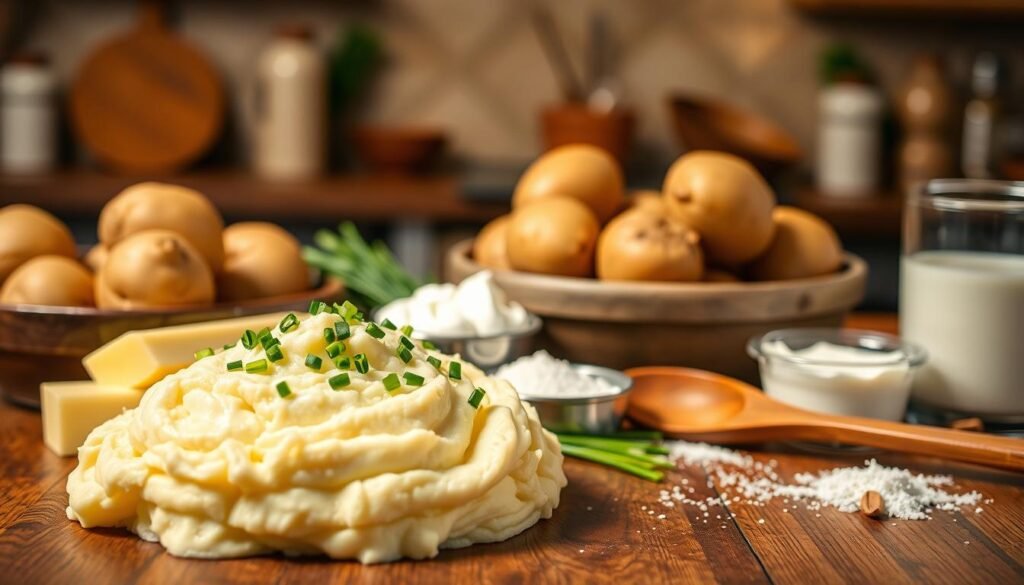
I start with a clear shopping list so the recipe runs smoothly. Use a full 5 lb bag of potatoes to feed a family and have leftovers for reheats.
Measure your dairy carefully: the recipe calls for 1/2 stick of salted butter and enough heavy cream to reach your preferred texture. Real butter gives the best flavor, so skip margarine.
Seasoning is simple but crucial. Stir in 1 tablespoon garlic powder and balance the richness with 1/2 tablespoon each of salt and black pepper.
- Gather everything first: the process moves quickly once the tubers are boiled and drained.
- Quality butter and cream are key to the signature taste of this texas roadhouse mashed copycat.
- The salt pepper and garlic powder combo creates the savory profile everyone expects from roadhouse mashed potatoes.
Choosing the Right Potato Variety
A simple choice at the store—russet or gold—dictates whether your final side comes out light and airy or rich and buttery.
I recommend selecting either a 5 lb bag of russet potatoes or yukon gold potatoes for this recipe.
Russet Versus Yukon Gold
Russet potatoes are high in starch. They break down easily when cooked and yield a fluffy texture that whips up light.
Yukon gold offer a naturally creamy, buttery mouthfeel. If you want a denser, richer mash, choose gold potatoes.
- Choosing the right potato is the first step in creating perfect mashed potatoes for dinner.
- I like russet because its starch gives a classic, airy finish.
- If you prefer more body and flavor, use yukon gold potatoes or a blend of both.
- Always pick firm tubers without green spots or sprouts, and peel them before boiling.
“The specific potato variety you select will significantly impact texture and the success of your recipe.”
Preparing Your Kitchen Equipment
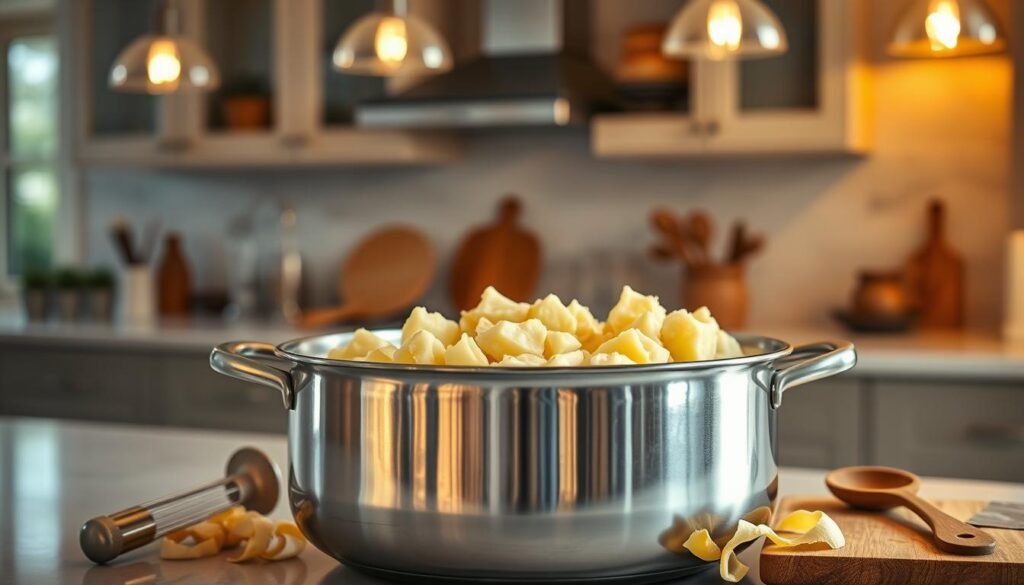
I lay out every tool before I boil a single tuber. This keeps the pace steady once the water reaches a boil.
Use a potato peeler instead of a knife for faster, safer prep. A sharp peeler saves time and reduces waste.
I rely on a sturdy masher to get the smooth, creamy texture I want. The right masher helps me fold in butter and cream evenly while the potato is still hot.
I always choose a large pot so the pieces have room to cook without crowding. A roomy vessel also makes stirring in sour cream and seasonings easier and neater.
- Stock your kitchen with a reliable peeler.
- Place your pot, masher, and measuring tools within reach.
- Warm the cream and butter slightly so they blend smoothly into the mash.
“Organizing your space first keeps the cooking calm and efficient.”
Mastering the Boiling Process
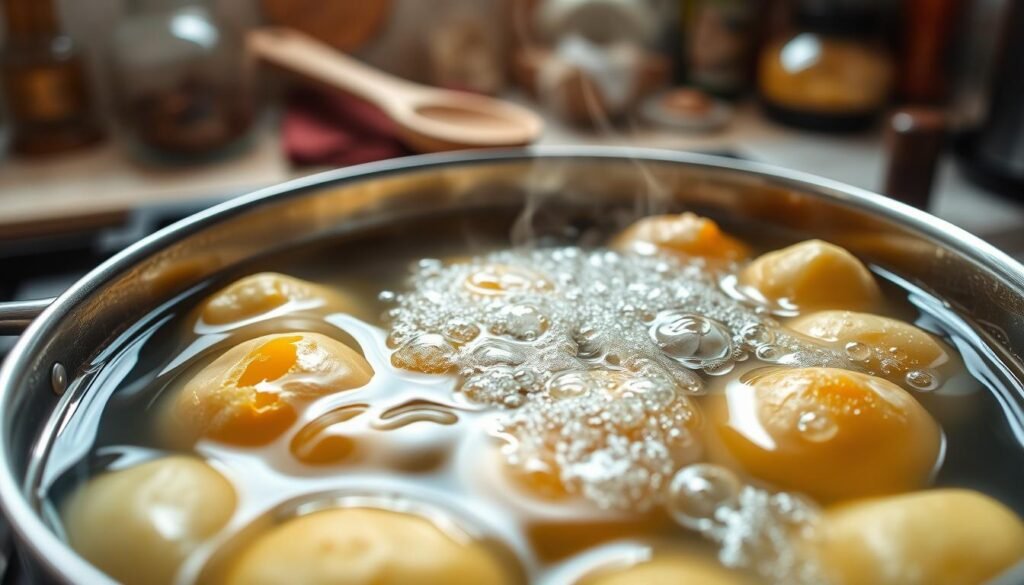
Start the boiling step with intention: how you heat the water sets the stage for perfect texture.
I always place peeled potato chunks into a pot filled with cold water before turning on the heat. This helps the pieces cook evenly from the inside out so the center and edges finish together.
Once the water reaches a rolling boil, reduce to a steady boil and time them for 15–20 minutes. That range is the ideal minutes window to make sure the potatoes are soft enough to mash without becoming waterlogged.
- I add a pinch of salt to the water so the flavor seasons the potato while it cooks.
- Keep an eye on the clock—watch the time to avoid overcooking.
- Check doneness with a fork; tender all the way through means you can drain the pot.
- After draining, let the pieces sit in a strainer for a few minutes to shed excess water and improve final texture.
“Mastering this step directly affects how well your mash potatoes will hold cream and butter.”
Follow these steps and you’ll get a consistent base every time. Good boiling makes the rest of my mashed potatoes method easy and reliable.
Creating the Perfect Creamy Texture
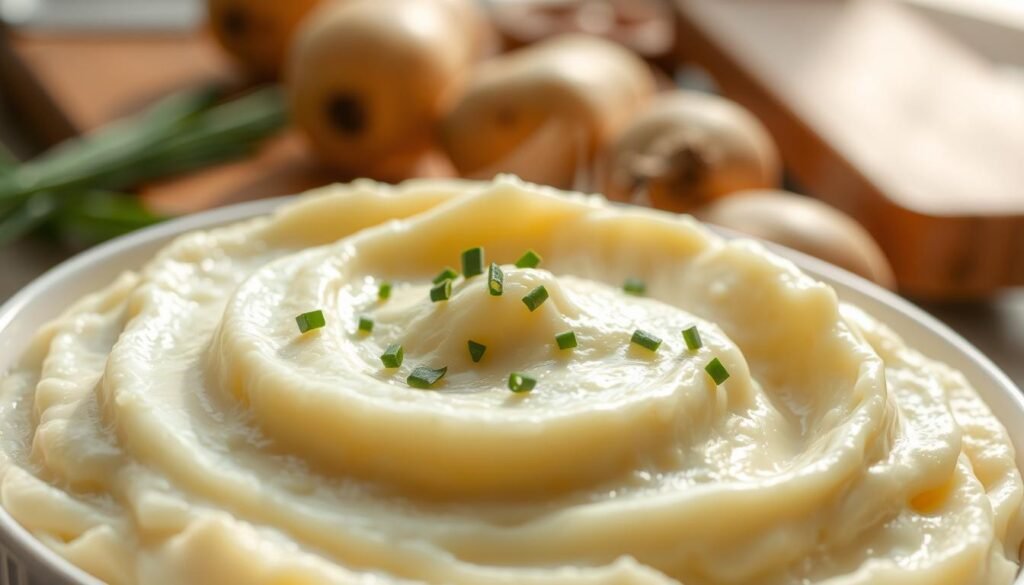
To get that restaurant-level cream, I focus on how dairy blends into the potatoes while they’re still steaming. Warming the dairy first keeps the mixture silky and prevents it from seizing when it hits hot starch.
The Role of Sour Cream and Cream Cheese
I add 4 oz of cream cheese and 1/4 cup sour cream to build richness and a gentle tang. The cream cheese gives body, while the sour cream adds a bright, slightly sour note that balances butter and heavy cream.
Warming Your Ingredients
I warm the butter, cream cheese, and a full cup heavy of cream before pouring. Then I add the cup sour mix slowly while mashing to reach the exact texture I want.
- Use warm cream so the dairy blends smoothly.
- Stir liquids in slowly and mash gently for control.
- If the mix is too thick, add more warm cream a little at a time.
“Warming dairy turns a good mash into a silky, restaurant-style side.”
How to Make Texas Roadhouse Mashed Potatoes at Home
Start by peeling and cutting your potato pieces into uniform chunks so they cook evenly. I find this step makes the final texture much smoother.
Place the pieces in a large pot, cover with cold water, and bring to a boil. Cook for 15–20 minutes until a fork slides through; total time for this recipe is about 25 minutes (5 prep, 20 cook).
While the potatoes boil, I warm a mix of cup heavy cream, cream cheese, butter, garlic, and cup sour cream in a small saucepan. Warming helps the dairy fold into the hot potatoes without cooling the mash down.
- Drain the potatoes well and return them to the pot.
- Pour the warm cream mixture over the potatoes and use a masher to reach your desired texture.
- I finish by seasoning to taste with salt, pepper, and garlic powder.
“This easy recipe turns simple ingredients into a rich, restaurant-style side dish in minutes.”
Serve warm with a sprinkle of fresh herbs. This copycat recipe recreates the classic roadhouse mashed potatoes experience at home with minimal effort.
Tips for Achieving Restaurant Quality Results
Nailing the final texture and seasoning is what separates a so-so side from a standout one. I focus on small timing and ingredient choices that make a big difference in the final plate.
Adjusting Consistency for Your Preference
If the mash seems too runny, I let it rest for about 10 minutes. That pause lets the starch absorb extra liquid and firms the texture without extra work.
I add warm cream and melted butter slowly and stir between additions. You can always add more, but you can’t take it out once mixed.
- I often turn this into a loaded version by stirring in bacon and cheddar cheese for savory depth.
- For a thicker feel, reduce the added cream and avoid overworking the mix in the pot.
- Always season last with salt and pepper and taste as you go to hit the perfect balance.
“A short rest and patient stirring are the two habits that lift my roadhouse mashed copycat to restaurant quality.”
Storing and Reheating Your Leftovers
Proper cooling and a little extra cream are the secret to great reheated leftovers.
I store any extra from this recipe in an airtight container in the fridge for 3–4 days. I also keep extra liquids — warm cream or a splash of water — in a separate jar. That way I can adjust the final texture when reheating.
When it’s time to reheat, transfer the portion to the potatoes pot or a microwave-safe bowl. Add a little extra cream or a pat of butter and stir every few minutes in the microwave to heat evenly.
- I seal containers tightly so the food keeps its flavor and avoids fridge odors.
- Storing the cream or sour mix separately helps maintain the ideal texture.
- These leftovers make a solid meal prep option; the next day they taste as good as the first time.
“A small amount of warm cream restores the silky finish and brings the dish back to life.”
Conclusion
With the right timing and a handful of quality ingredients, this recipe comes together in just a few simple steps. I hope you feel confident to recreate these creamy roadhouse mashed potatoes in your own kitchen and serve a reliable, tasty side dish.
Master the balance of cream, butter, and garlic, and spend a little time tasting as you go. Save the recipe pin so you can find it in minutes, and share your results—I’d love to see your version with sour and cheese added.
Thank you for cooking along with me. A few focused minutes will turn this potatoes recipe into a new family favorite.
