
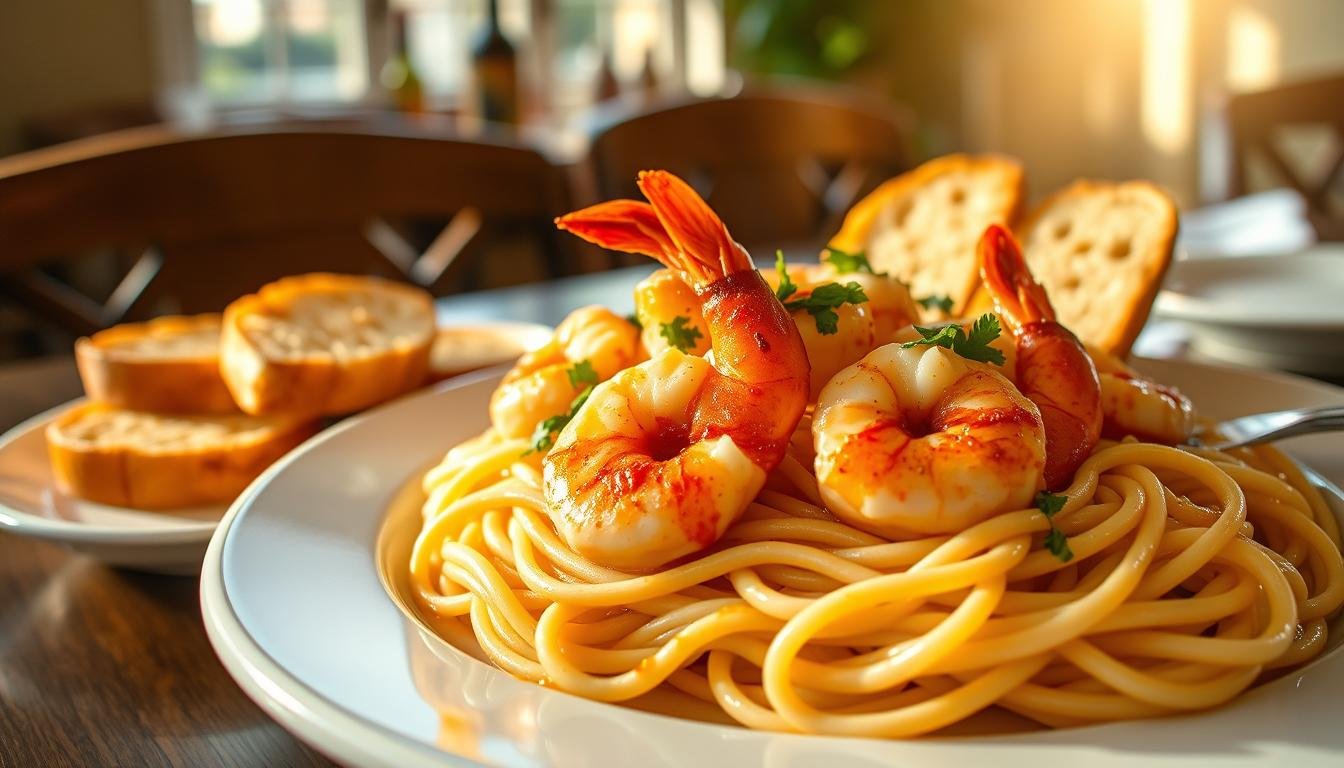
Can a home kitchen truly match a well-loved restaurant plate in just 30 minutes? I asked myself that the first time I tried to recreate a classic, and the answer surprised me.
I love bringing restaurant flavor into my house without a reservation. After many tests I landed on a copycat olive garden version that balances butter, garlic, and lemon for a bright, rich sauce.
This shrimp scampi recipe keeps the shrimp tender and uses fresh additions like asparagus and tomatoes to lift the dish. I use a splash of wine, a bit of pepper, and just the right heat to finish the pasta perfectly.
Key Takeaways
- I recreated a reliable copycat olive garden dish you can cook in about 30 minutes.
- Balance of butter, garlic, and lemon is central to the flavor.
- Fresh asparagus and tomatoes add color and texture.
- Simple steps keep shrimp tender and sauce rich.
- This recipe works well with angel hair or your favorite pasta as a main or side.
Why I Love Making Olive Garden Shrimp Scampi at Home
A home-cooked version of a favorite entree proves that great flavor starts with choice ingredients.
I prefer to pick fresh 16/20 shrimp for the best texture. That control over quality beats the guesswork of dining out and keeps the final dish tender.
The whole recipe takes under 30 minutes, so it works well on busy weeknights. In about the same time as takeout, I have warm pasta, bright lemon juice, and a buttery sauce on the table.
I rely on white wine and garlic to build a layered flavor that feels upscale. I can also dial the heat with a few red pepper flakes to suit everyone at the table.
- Fresh ingredients: better taste and texture.
- Fast prep: under 30 minutes from start to finish.
- Customizable heat: add or cut flakes to taste.
Making this copycat olive garden version at home saves money and lets me enjoy a restaurant-style pasta as a main or side without the wait.
Essential Ingredients for Your Copycat Dish
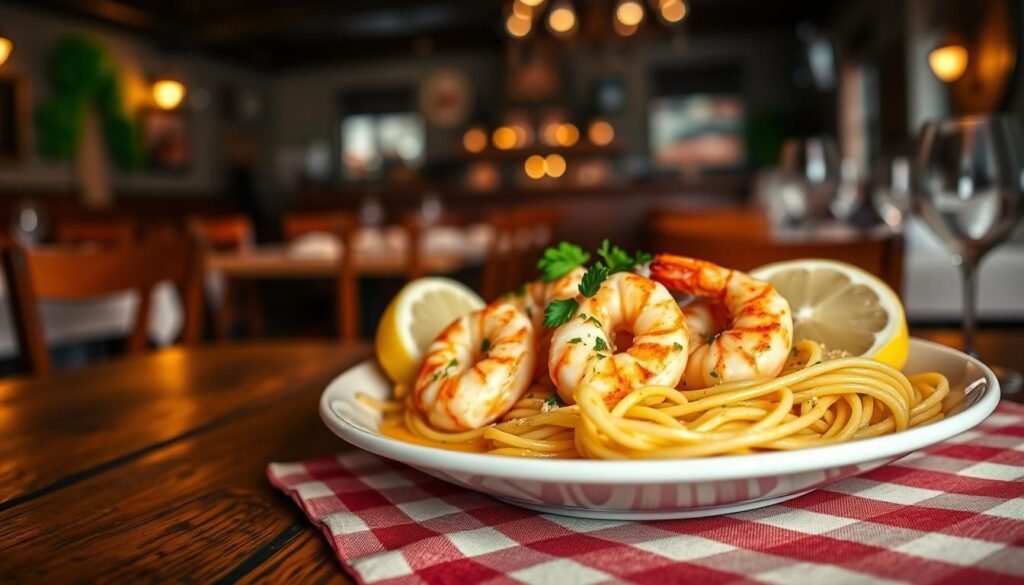
A few smart choices in protein and pasta set this copycat dish up to win every time.
Selecting the Right Shrimp
I recommend 16/20 shrimp for this recipe because their size helps prevent overcooking during a quick sauté. I buy peeled, deveined, and tail-on when I can; the tails help the presentation.
Tip: Pat the shrimp dry and season lightly with salt, pepper, and a pinch of red pepper flakes before they hit the pan.
Choosing Your Pasta
Angel hair pasta is the traditional match here. Its thin strands soak up the light butter and wine sauce without weighing the dish down.
For texture and color, I add fresh Roma tomatoes and a few asparagus tips. Unsalted butter and a dry white wine like sauvignon blanc or pinot grigio form the sauce base.
“High-quality butter and fresh garlic make a simple sauce taste far better than its parts.”
- 16/20 shrimp — tender, large enough to stay juicy
- Angel hair pasta — delicate and fast-cooking
- Unsalted butter, dry white wine, lemon juice, garlic
Preparing the Perfect Pasta Base
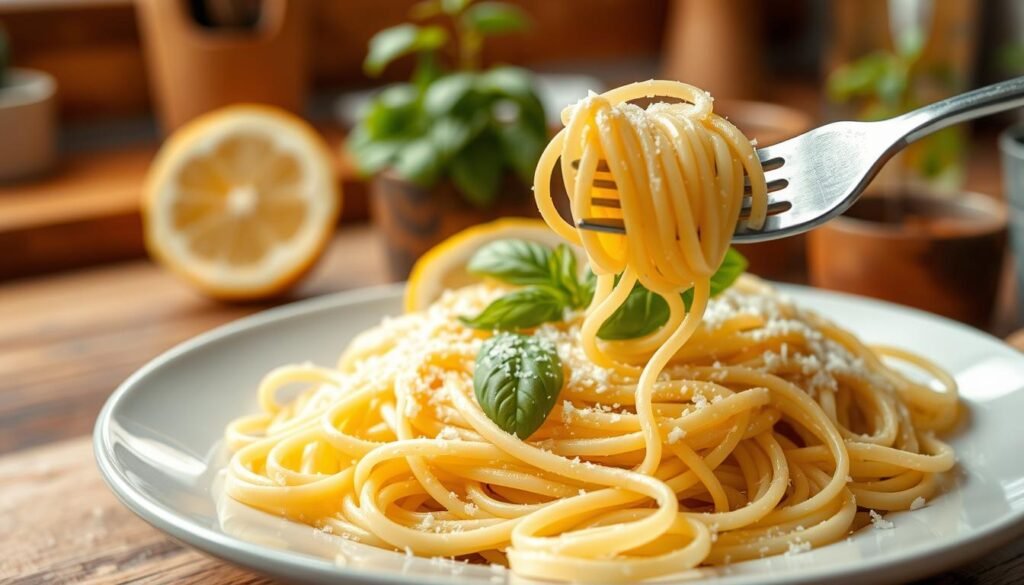
Start the pasta just before the sauce finishes so the strands finish cooking together. I boil 12 ounces of angel hair pasta in a large pot of generously salted water until it is just shy of al dente.
Reserve 1/2 cup of pasta water before you drain. That starch-rich cup helps the sauce cling and gives the final dish body when emulsified with butter and wine.
Be gentle when you toss the cooked pasta with the sauce. The thin hair pasta breaks if handled roughly, so fold with tongs and lift rather than stir hard.
- Timing: Have the sauce ready as the pasta finishes so the strands finish cooking in the warm sauce.
- Texture: Use the reserved pasta water to loosen and bind the sauce.
- Finish: A squeeze of lemon and a pinch of pepper brightens the plate before serving.
I use these steps every time I make my copycat olive garden version to ensure the pasta and sauce come together in under 30 minutes and the dish stays silky and balanced.
Mastering the Garlic and Wine Scampi Sauce
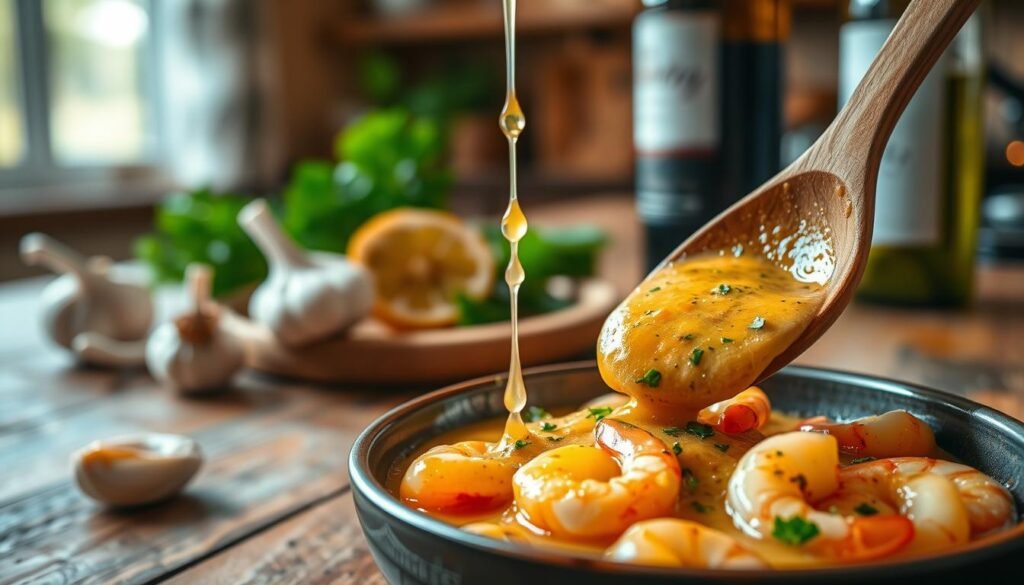
A bright, reduced wine base is the unsung hero that ties this dish together. I begin by melting 2 tablespoons of butter and gently sautéing minced garlic and a bit of onion until they are soft but not browned. This step protects the garlic’s flavor and keeps the sauce clean.
The Role of White Wine
I add 1 cup of dry white wine and let it reduce by half. The slow reduction concentrates flavor and builds depth in under 10 minutes of time. Then I stir in 1/8 teaspoon of red pepper flakes for a subtle heat that balances the butter.
Once the wine is reduced, I whisk in the remaining 1/4 pound of unsalted butter a few tablespoons at a time. This creates a velvety emulsion. A squeeze of fresh lemon juice brightens the sauce and lifts the richness.
- Keep heat low: prevents garlic from burning and keeps sauce smooth.
- Reduce the wine: one cup to half gives complex flavor in minutes.
- Finish with butter and lemon: yields a glossy, balanced sauce perfect for pasta and protein.
Cooking the Shrimp to Tender Perfection
One to two minutes per side is all it takes to reach perfect doneness. I heat a skillet until it’s hot, then melt the tablespoons butter so the surface shimmers.
I season the protein with a pinch of salt and pepper before it hits the pan. This quick seasoning lets the natural flavor come forward without masking the sauce.
Cook the shrimp for only 1 to 2 minutes per side, until they turn pink and curl slightly. Look for a white, opaque line along the back — that signals they are done.
Remove them immediately from the skillet and set them aside. Resting the shrimp prevents carryover cooking and keeps them tender when you finish the dish with the sauce and pasta.
- Preheat skillet and melt tablespoons butter over medium-high heat.
- Season lightly with salt, pepper, and a pinch of red pepper flakes if desired.
- Cook 1–2 minutes per side, then remove immediately to avoid rubbery texture.
By cooking the shrimp separately from the sauce, I make sure they stay juicy and don’t get lost in the pasta. Then I add them back at the end so each bite has bright garlic, wine, and lemon juice.
Incorporating Fresh Vegetables for Authentic Flavor
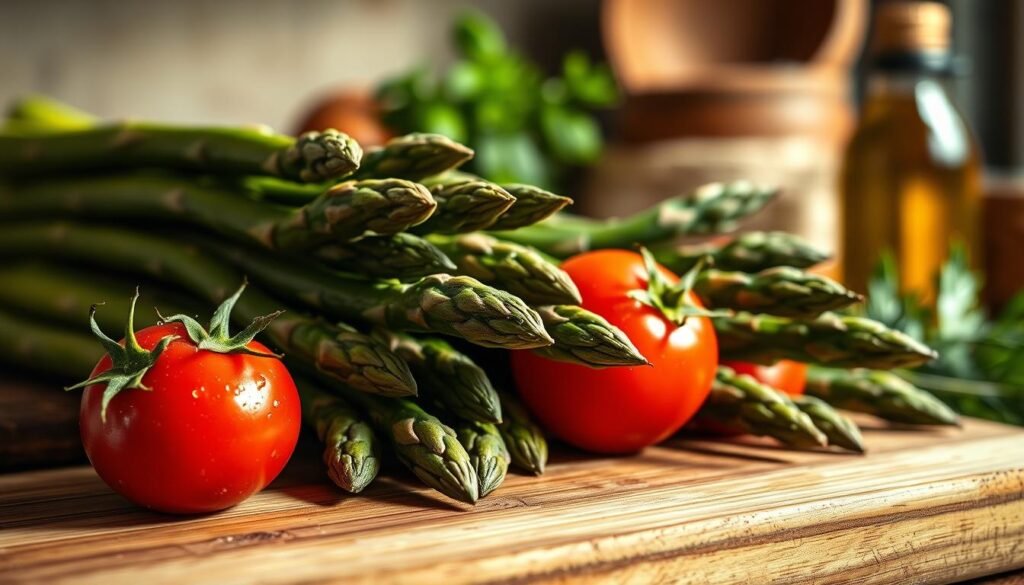
Thin stalks and ripe tomatoes finish in minutes and keep texture lively. I add vegetables late so they stay crisp-tender and play off the rich, garlicky sauce.
Asparagus and Tomato Variations
Thin asparagus is my first pick because it cooks fast and holds a pleasant snap. I trim and slice on the diagonal for even bites.
Chopped Roma tomatoes add a bright, juicy contrast to the butter-and-wine base. They release a little water that blends with the sauce and keeps the pasta from feeling heavy.
Adding Bell Peppers and Onions
If you want a classic swap, I use a mix of red, yellow, and green bell peppers with thinly sliced onion. Sauté until just tender so the peppers stay sweet and lively.
- Sauté vegetables in the same pan used for the shrimp to pick up browned bits.
- Cook thin asparagus 2–3 minutes; tomatoes 1–2 minutes to soften.
- Double the veg for a heartier, vegetable-forward meal that still feels special.
I often finish by tossing the veg with pasta, reserved water, and the sauce so every strand carries flavor. For a copycat olive garden touch, fold the cooked shrimp back in and serve immediately.
Tips for Customizing Your Shrimp Scampi Recipe
A few smart swaps let me tailor the dish to any mood or pantry.
I keep one eye on timing and the other on texture. For a non-alcoholic version I swap equal parts white wine for high-quality chicken or vegetable broth. The swap keeps the bright base without alcohol and still reduces into a tasty sauce.
If I want extra richness, I stir in a few tablespoons of heavy cream right before serving. That adds silk without masking the garlic and lemon.
“A small change—different pasta, a splash of cream, or a broth swap—can refresh a favorite in minutes.”
- Crispy option: dust the shrimp in flour mixed with grated Parmesan for a light breading.
- Pasta swap: use linguine or spaghetti if you want more chew than angel hair.
- Serve: warm breadsticks are perfect for sopping up any leftover butter and wine sauce.
Best Practices for Storing and Reheating Leftovers
A quick reheating routine prevents the sauce from breaking and the shrimp from getting tough. I store any leftovers in an airtight container in the refrigerator for up to three days. Fresh is always best, but careful storage keeps texture and taste close to the original.
When it’s time to reheat, I prefer a saucepan over medium heat. Add a small splash of water, wine, or pasta water to loosen the thickened sauce. Stir gently until the sauce becomes glossy again and the pasta heats through.
Reheating Without Overcooking
Avoid the microwave when possible — it often makes the shrimp rubbery and can make the butter and wine split. If you must use the microwave, heat in short 30-second intervals and stir between bursts.
- Use a low to medium stovetop heat and add a tablespoon of liquid at a time.
- Check for doneness frequently so you don’t cook the shrimp more; they only need minutes to warm.
- If the pasta has soaked up the sauce overnight, add extra pasta water or a splash of wine to revive it.
Tip: Finish with a pinch of salt, a grind of pepper, or a few flakes of red pepper if you want to brighten the reheated dish. A light toss keeps the angel hair or hair pasta from clumping and preserves the bite.
Conclusion
This copycat olive garden version shows you can serve a restaurant-style plate at home in about 30 minutes.
I built this recipe to keep steps simple and results reliable. Focus on quality protein and the timing of the pasta for the best texture.
The blend of garlic, white wine, and butter makes a timeless sauce that lifts the angel hair pasta into something special. Do not overcook the shrimp; use reserved pasta water to bind the sauce and finish with a touch of pepper and lemon.
I hope this guide helps you feel confident as you recreate the olive garden shrimp copycat at your table. Happy cooking.
