
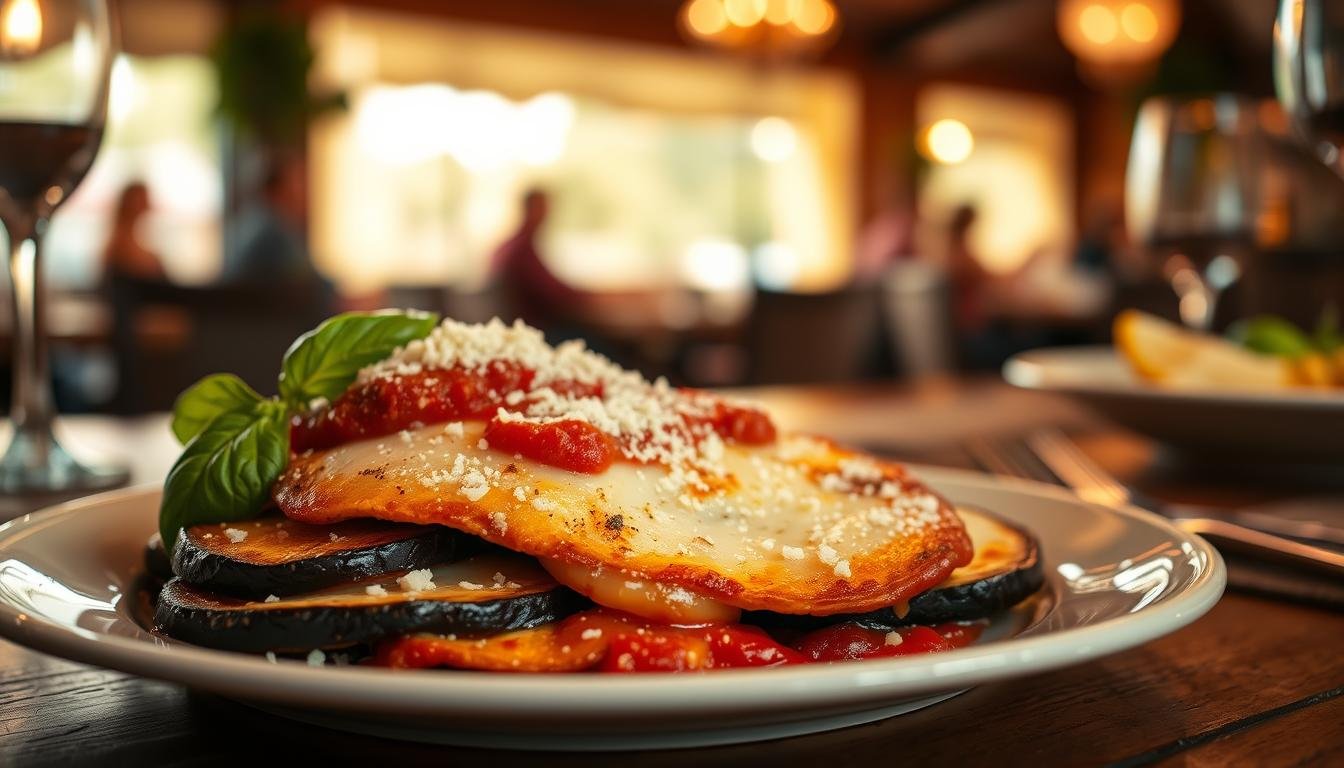
Can a homemade version truly match the warm, cheesy comfort of the restaurant classic?
I love recreating that memorable meal at home because it is far more affordable than dining out. I’ve spent years refining a copycat eggplant parmigiana olive garden recipe so it tastes like the original.
My method gives me control over every ingredient, so each serving is fresh and perfectly seasoned. Donna Elick’s copycat notes that this yields four servings with four pieces per person, a detail I follow closely.
Whether you’re a fan of the vegetable or just crave a hearty Italian dinner, my step-by-step guide will help you make a restaurant-quality eggplant parmesan at home. Expect cheesy layers, rich sauce, and a comforting finish that rivals the menu item.
Key Takeaways
- My recipe recreates the Olive Garden experience at home affordably.
- I control ingredient quality for fresher, better results.
- Donna Elick’s copycat yields four servings with four pieces each.
- Step-by-step instructions aim for restaurant-quality flavor.
- This guide helps you master a cheesy, saucy comfort meal anytime.
Why I Love Making Eggplant Parmigiana Olive Garden Style
I enjoy bringing the restaurant’s rich flavors home so I can control every bite.
I make this copycat because it delivers big, comforting portions that hold up as leftovers. Donna Elick notes the original recipes are hearty, and my version follows that lead to feed a family or to enjoy for several meals.
The method pairs crispy fried eggplant slices with a bright marinara sauce. I layer cheese and sauce so each bite is saucy and satisfying.
This recipe is versatile. I serve the dish with pasta or let it stand alone as a warm main. Making it at home saves me time and money, and I can tweak sauce and cheese to suit tastes.
“These copycat recipes are comforting and generous, perfect for sharing and saving.”
- Big portions that reheat well.
- Customizable sauce and cheese levels.
- A comforting, restaurant-style meal made at home.
Essential Ingredients for Your Italian Feast
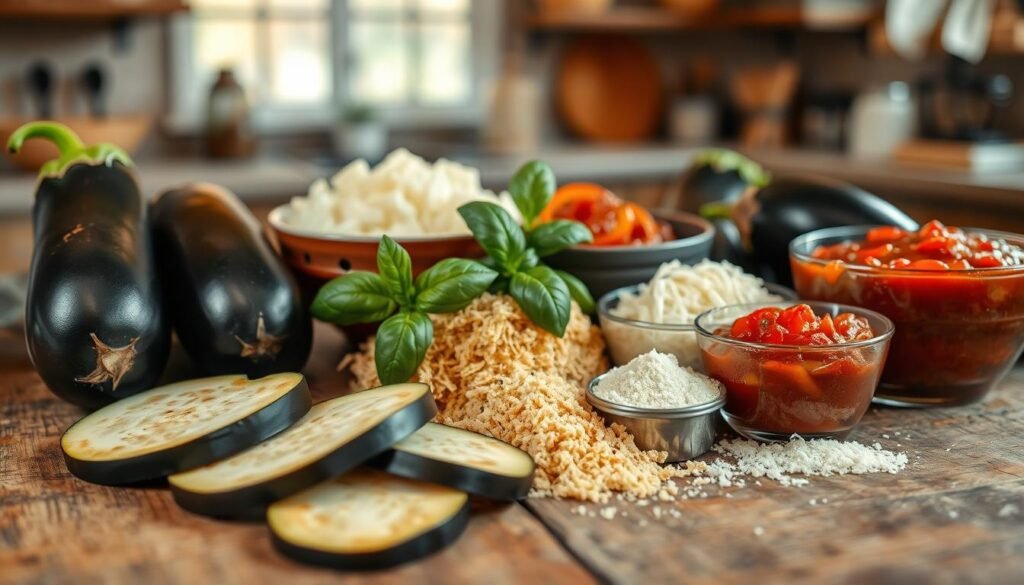
Quality produce and proper cheese selection set the stage for a memorable, home-cooked Italian meal.
Selecting Quality Produce
I start by choosing two large, firm eggplants so the texture holds during baking. Firm slices resist sogginess and crisp up nicely after breading.
I keep a cup of all-purpose flour, beaten egg, and Italian breadcrumbs ready to build a reliable coating. Salt and freshly ground pepper are non-negotiable for seasoning each layer.
Choosing the Right Cheeses
I grate my own mozzarella cheese and parmesan cheese to avoid anti-clumping agents and to get a true melt. Freshly shredded cheese gives a richer top and better browning during baking.
A high-quality marinara sauce made with garlic and a drizzle of olive oil ties the flavors together. I often serve the finished dish with a side of al dente pasta and an extra splash of oil on top for a restaurant feel.
“Grating your own cheese makes a real difference in melt and texture.”
- Two large eggplants for texture.
- Flour, egg, breadcrumbs for a crisp coat.
- Mozzarella and parmesan for a bubbly, golden top.
Preparing the Eggplant for Perfect Texture
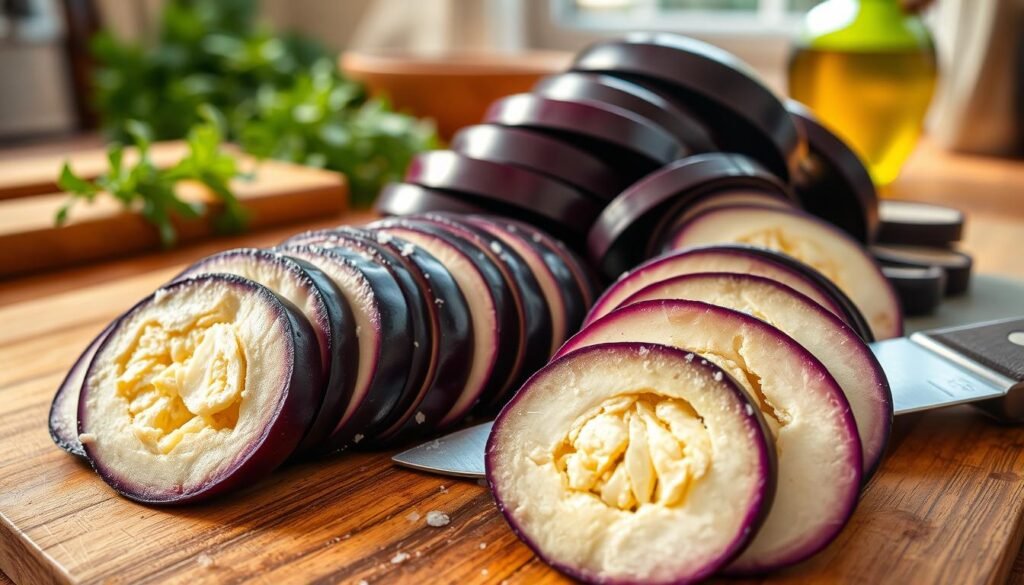
A little time up front prevents a watery bake later on.
I slice my eggplant into 1/2-inch rounds so each piece cooks evenly and holds shape. Donna Elick’s tip to cut to a half-inch makes a real difference in texture and bake time.
The Importance of Salting
I salt the eggplant slices for about 15 minutes to pull out excess moisture and any bitterness.
After 15 minutes I pat each round dry with paper towels. This step ensures the coating crisps and the layers do not become soggy during baking.
- I keep the skin on my eggplants for texture and nutrients.
- Slicing to a consistent half-inch helps them brown evenly.
- Patting dry after salting removes surface moisture before breading.
“Salting and drying are simple steps that protect the final dish from becoming watery.”
Follow this prep and your eggplant parmigiana or eggplant parmesan will stay firm, flavorful, and far closer to an Olive Garden eggplant standard in texture.
Mastering the Breading Process
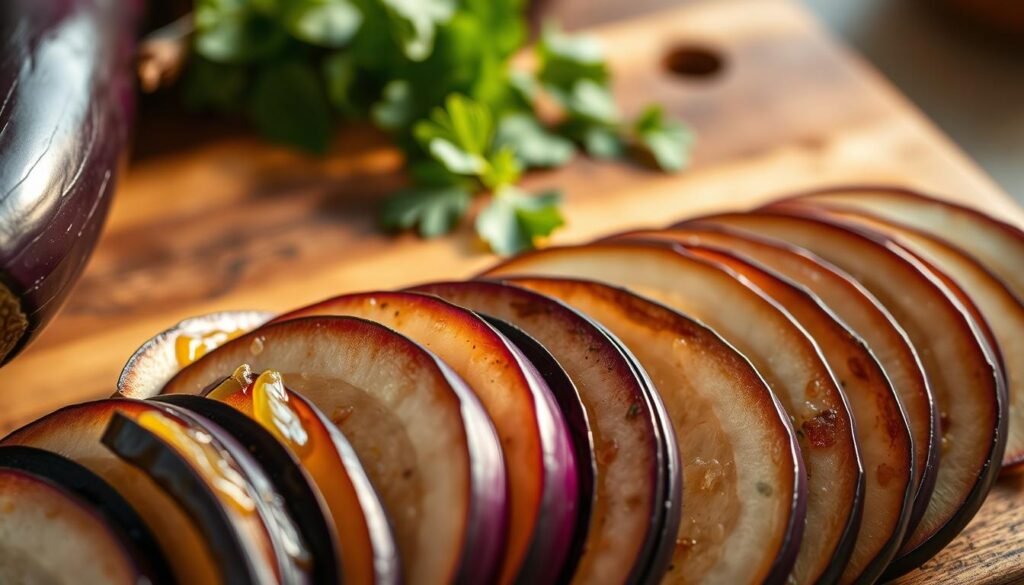
For a reliable crust, I set up a simple dredging station that keeps the workflow smooth.
I use three shallow bowls: one with flour, one with a beaten egg, and one with a cup of seasoned Italian breadcrumbs.
Each of the eggplant slices is first dusted in flour. I shake off excess flour so the coating will stick.
Next I dip the rounds into the egg, then press them firmly into the breadcrumbs. This triple step builds a thick, crunchy crust that holds up during frying.
I like to add a small pinch of garlic powder to the breadcrumbs. That touch lifts the flavor of the slices without extra work.
- I prepare all ingredients before I start to speed the process.
- I press breadcrumbs firmly so they adhere well.
- I place coated slices on a clean plate or wire rack while I heat the oil.
“A tidy breading station makes the whole recipe faster and neater.”
Tips for Frying Eggplant Slices
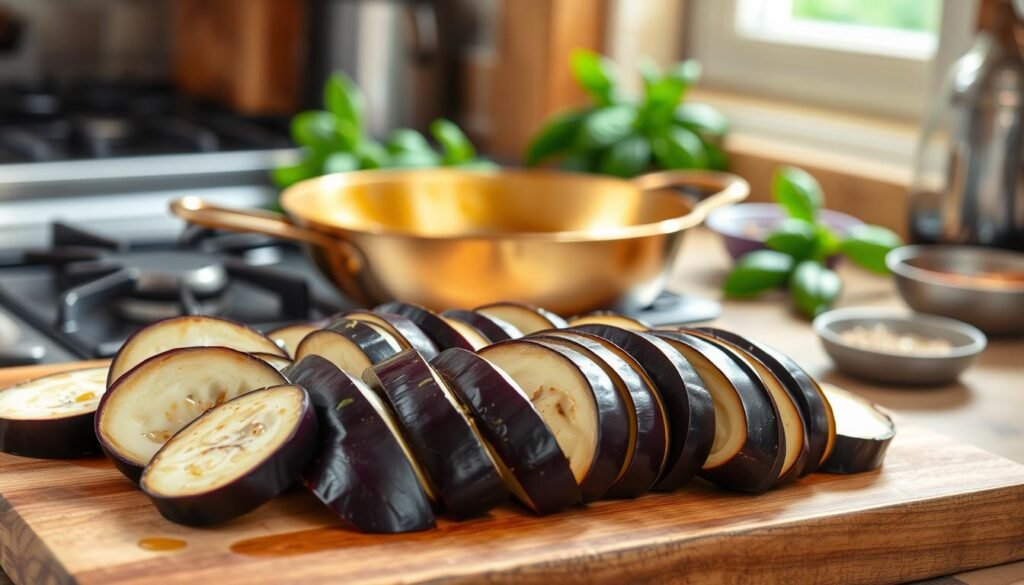
Frying properly turns soft rounds into crisp, golden layers that hold up in the bake.
I heat my olive oil in a large skillet over medium heat. The pan needs steady heat so each slice cooks evenly.
Maintaining Oil Temperature
I fry eggplant in small batches to keep the pan from cooling. If the oil drops too low, coatings soak up oil and go soggy.
Donna Elick recommends about 2–3 minutes per side until they are golden brown. Watch the first round to set your timing.
Avoiding Overcrowding
I never crowd the skillet. Each of the eggplant slices needs room so steam can escape and the crust stays crisp.
After frying, I move each piece to a wire rack to drain excess oil. That keeps the fried eggplant crisp before assembly.
- I lightly season hot rounds with a pinch of salt.
- Use a high-quality frying oil—I prefer avocado or olive oil.
- Keep a small bowl of extra breadcrumbs nearby for quick repairs if a coating sheds.
“Fry in batches and drain on a rack to protect texture and flavor.”
Assembling Your Eggplant Parmigiana Olive Garden Dish
A careful build in a 9×13 baking dish ensures even cooking and balanced bites.
I begin by spreading a thin layer of marinara sauce across the bottom of my 9×13 baking dish. That thin bed stops the fried slices from sticking and keeps the bottom moist without sogginess.
I arrange the fried eggplant rounds in a single layer. Each piece gets a spoonful of sauce, then a generous sprinkle of shredded mozzarella and grated parmesan cheese.
Repeat the layers until all slices are used. I finish with a final blanket of mozzarella cheese and extra parmesan cheese on top for a golden crust.
- Use a mix of mozzarella cheese and parmesan cheese for melt and flavor.
- Save a cup of sauce to toss with pasta as a simple side.
- Let the assembled dish rest 10 minutes before baking to limit moisture loss.
This layering technique makes sure each bite has sauce, crunchy coating, and melted cheese—true to the eggplant parmigiana I want to recreate.
Baking to Golden Perfection
I preheat the oven to lock in flavor and coax the layers into a single, tender bite.
I set my oven to 375°F and slide the assembled baking dish onto the center rack. I bake for 20 minutes so the sauce and cheese meld and the layers heat through evenly.
When the timer ends I check that the cheese is bubbly and the edges are starting to turn golden brown. For a deeper finish, I sometimes broil the top for an extra 2–4 minutes, watching closely to avoid burning.
The contrast of the fried eggplant slices and warm marinara gives a hearty bite. Letting the dish rest for a few minutes helps the layers set and makes slicing neater.
“Baking at the right temperature and giving the dish time to rest yields the best melt and texture.”
- Preheat to 375°F; bake 20 minutes.
- Broil 2–4 minutes if you want a golden top.
- Rest briefly before serving for clean slices and fuller flavor.
Serving Suggestions for a Restaurant Experience
To make dinner feel like a night out, I pair the main dish with warm breadsticks and a crisp salad.
I plate the dish with a bowl of hot spaghetti on the side and a small dish of extra marinara sauce for dipping. That extra sauce brightens each bite and keeps the meal saucy without sogginess.
I add a fresh garden salad tossed with the classic Olive Garden dressing to bring a cool, tangy contrast. A few fresh basil leaves on top add color and aroma.
- Serve warm breadsticks for a soft, pull-apart starter.
- Offer extra sauce for dipping and spooning.
- Pair with spaghetti to make the plate more filling.
- Garnish with basil and a light dusting of parmesan.
- For special nights, add stuffed mushrooms or lasagna fritta as a lavish side.
“These simple sides help the home recipe feel like a night at a favorite restaurant.”
Storing and Reheating Your Leftovers
Leftovers can taste even better after a night in the fridge, if you store them the right way.
I store my leftover eggplant parmigiana in an airtight container in the refrigerator. It stays fresh for up to 3–4 days, just as Donna Elick recommends.
For a single portion, I reheat in the microwave in 30-second bursts until warmed through. That method keeps the cheese soft and avoids drying the sauce.
When I reheat larger portions, I warm them in a saucepan over medium heat. I add a splash of water or extra marinara sauce to restore moisture and coax the cheese into a creamy top again.
- I divide the dish into individual portions before storing for quick lunches.
- Seal the baking dish or containers tightly to protect flavor and cheese quality.
- Reheat in short bursts or on medium heat with a splash of sauce to preserve texture.
“Store leftovers in an airtight container for 3–4 days and reheat single portions in 30-second microwave bursts.”
Conclusion
, To finish, a few careful steps turn simple ingredients into a memorable family dinner.
I hope this guide helped you master an olive garden-style take on a classic. Follow the salting, breading, and frying tips so your eggplant layers stay crisp and flavorful.
With proper layering and good cheese choices your parmesan bake will sing. This eggplant parmigiana is an approachable way to make a standout main at home.
Try the full eggplant parmesan recipe and tweak seasonings to taste. Over time, these recipes save money and bring restaurant comfort to your table. Thanks for spending the time—I can’t wait to hear how your dish turns out.
