
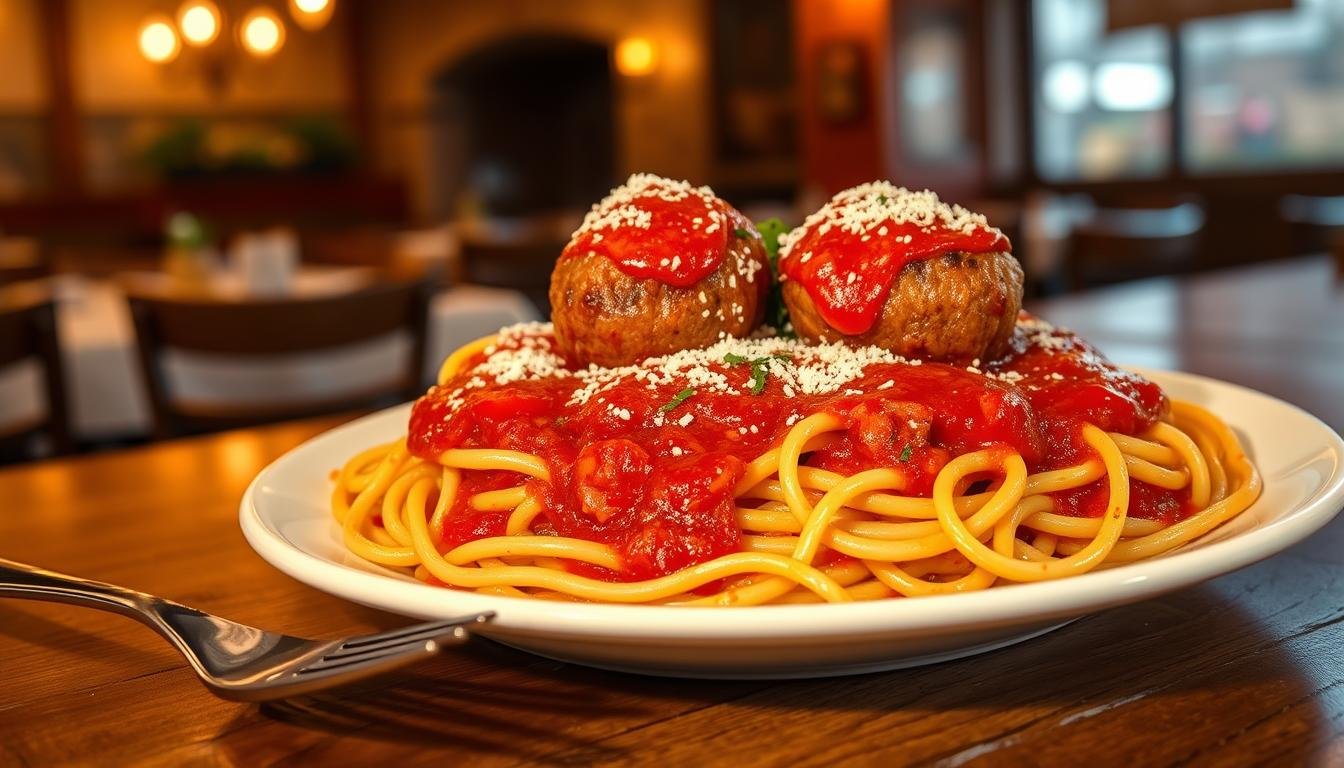
Have you ever wondered if a restaurant favorite can taste just as good when made at home?
I love recreating this iconic dish because it captures the rich, comforting flavor of the original recipe with simple steps anyone can follow.
My copycat recipe takes about 30 minutes from start to finish and uses easy-to-find ingredients you can pick up at a local store.
The classic pasta pairs perfectly with signature marinara sauce, and searing the meatballs over medium-high heat gives them a savory crust before finishing in the oven.
I serve mine with warm bread sticks to complete the experience that millions enjoy at Olive Garden locations.
Key Takeaways
- This copycat recipe recreates the restaurant taste in about 30 minutes.
- High-quality ingredients make a big difference in flavor.
- Searing meatballs on medium-high heat locks in juices and color.
- Marinara sauce and pasta form the classic base of the dish.
- Serve with warm bread for an authentic finish.
Why I Love Making Olive Garden Spaghetti and Meatballs at Home
I like making this classic at home because it gives me full control over quality and taste. Fresh ingredients and simple techniques make the result reliably close to the restaurant version.
My copycat recipe takes only a few active minutes to prep, then I simmer the sauce for about 20 minutes so the flavors meld. That short simmer adds real depth without a long fuss.
Preparing meat by hand means the meatballs stay juicy and keep their shape. I can also adjust portions so every plate of spaghetti gets just the right amount of topping for my family.
- I control the meat quality for better texture.
- It saves a trip to a busy Olive Garden at peak times.
- Family dinners are faster and more flexible—perfect for weeknights.
Essential Ingredients for Your Pasta and Sauce
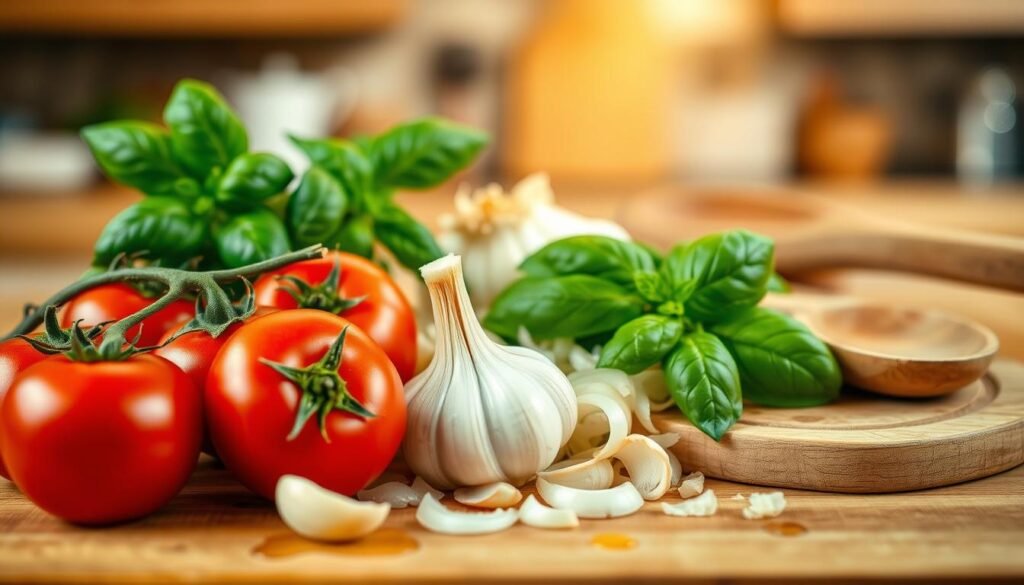
The right ingredients set the stage for a balanced plate. I keep a simple lineup ready so the sauce simmers quickly and the meat stays tender.
Pasta and Sauce Components
I use crushed tomatoes and marinara sauce as the base, plus a pinch of sugar to tame acidity. Two cloves garlic, minced, go into the pan with high-quality olive oil to wake up the flavors.
Season the sauce with italian seasoning, salt, and black pepper. A touch of red pepper flakes adds subtle heat without overpowering the tomatoes.
Meatball Blend Essentials
To start, I combine 1 lb of ground beef and 1 lb of ground pork in a large bowl to balance flavor and fat.
- 1 cup bread crumbs keeps the mixture light and tender.
- I fold in grated parmesan cheese and fresh parsley for savory depth and brightness.
- Season with italian seasoning, salt, and black pepper so each bite is well seasoned.
Having every ingredient measured into a bowl before I mix saves time. That small step helps the recipe run smoothly from pan to plate.
Preparing the Perfect Meatball Mixture
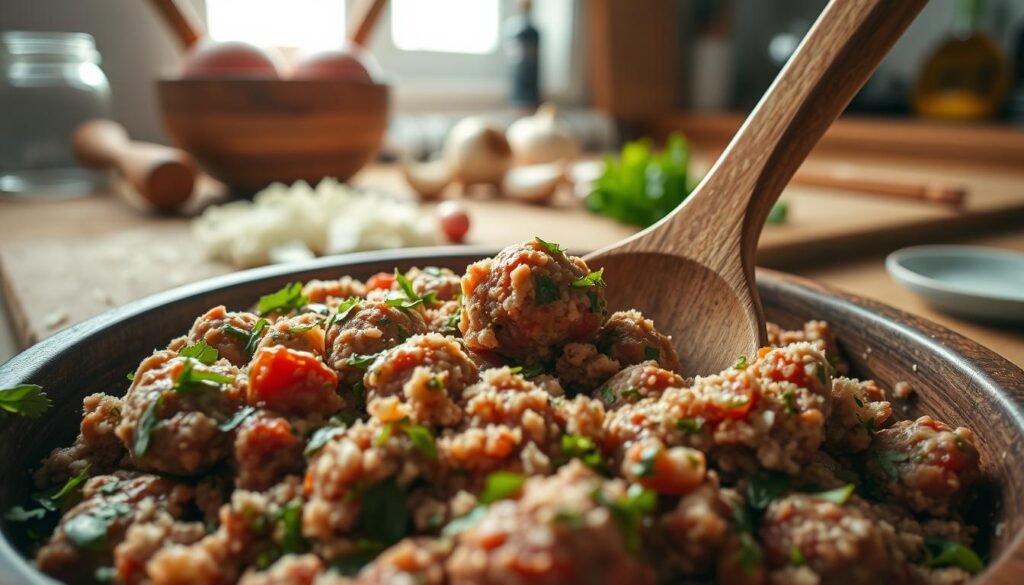
A well-made mixture is the foundation of every tender, flavorful meatball. I keep my steps simple so each bite stays juicy and balanced.
Gather your ingredients in a large bowl. I gently mix the ground beef, ground pork, bread crumbs, grated parmesan, fresh parsley, cloves garlic, italian seasoning, salt, and red pepper with my hands. I avoid overworking the meat to keep the texture light.
The Importance of Chilling Your Mixture
After I combine the meatball mixture, I place it in the refrigerator for at least 30 minutes. Cooling firms the fat and helps the mixture hold its shape when rolled.
- I preheat oven to 400 degrees while I portion the mixture into 1/4 cup scoops.
- Using damp hands, I roll uniform balls and set them on a parchment-lined sheet.
- Once shaped, I chill the meatballs again for 10 minutes before baking or searing.
This careful prep ensures even cooking time, a nice crust in the pan, and tender centers that pair perfectly with marinara sauce and pasta.
Mastering the Cooking Process
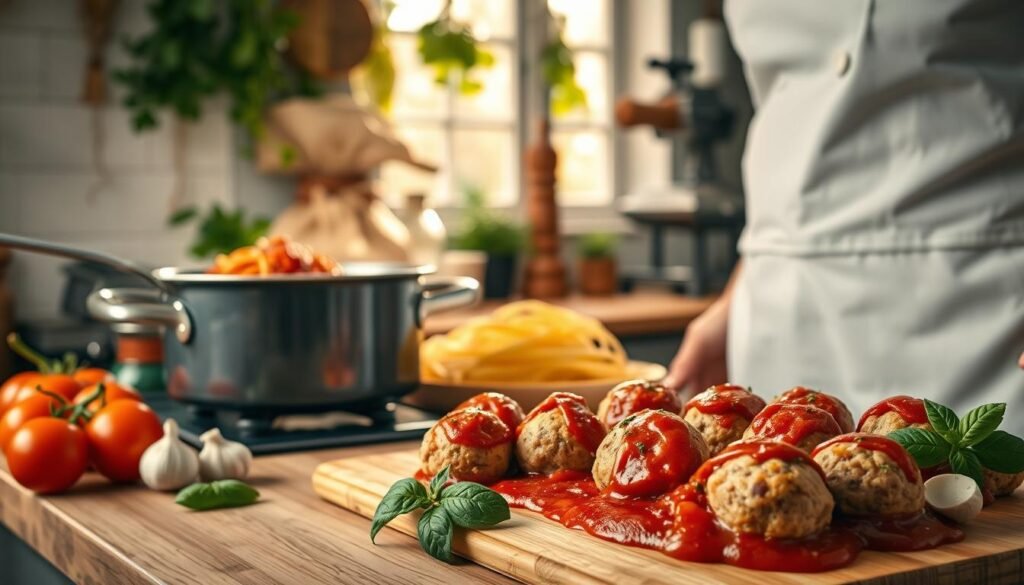
Controlling pan temperature and oven minutes makes all the difference when I bring this recipe together.
I sear the meatballs in a hot skillet for 3 minutes, turning them to build a deep, golden crust. Then I transfer the pan to a preheated oven at 400°F and bake for 15 minutes until they reach 165°F internal temp.
While the meatballs bake, I make the marinara sauce in a pan. I sauté garlic in olive oil, add tomatoes, seasoning, a pinch of sugar, then deglaze with a splash of red wine for depth.
I cook the spaghetti in a large pot of salted water until al dente—about 10 minutes of boiling time. After the meat bakes, I drain excess fat from the skillet so the sauce stays clean and bright.
To finish, I ladle a few scoops of sauce over the meatball mixture, then toss everything with the cooked pasta so every plate is hot and well coated.
- Skillet sear: 3 minutes per batch for color.
- Oven bake: 15 minutes at 400°F for safety and texture.
- Pasta boil: ~10 minutes to al dente.
Tips for Achieving Authentic Restaurant Flavor
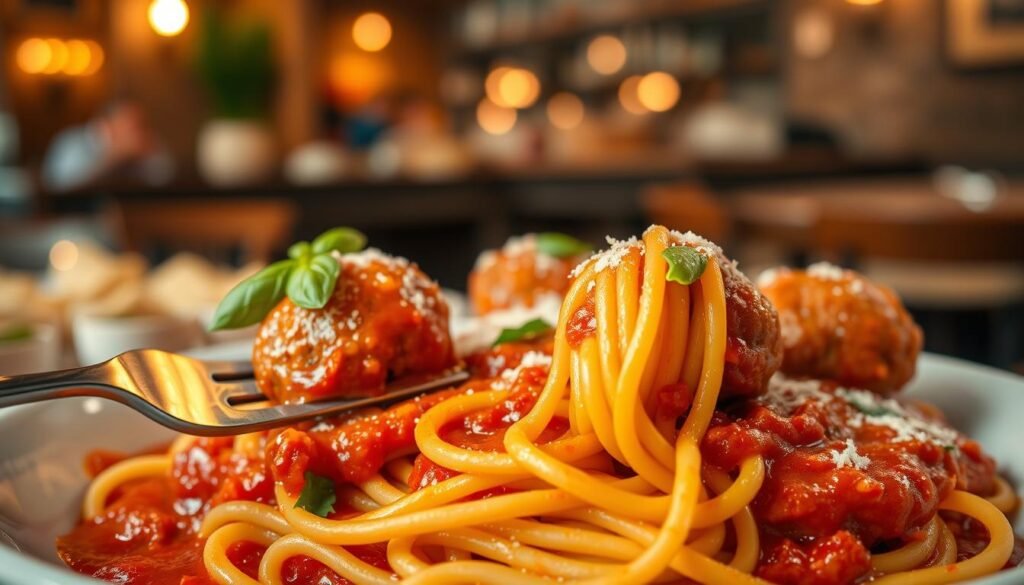
Fine-tuning temperature and timing gives each component the deep flavors chefs aim for. These small moves help the sauce and meat reach a true restaurant level without extra fuss.
Searing for Color
I always sear the meatballs for about 3 minutes per side to trigger the Maillard reaction. That crust adds savory depth the sauce cannot mimic.
Before searing, I keep the mixture cold in the refrigerator. Cold meat holds shape when it hits high heat in the pan.
Draining Excess Fat
After baking or searing, I drain excess fat so the marinara sauce stays bright and not greasy. This step keeps the finished plate clean and balanced.
- Use high-quality grated parmesan as a finish for salty, umami notes.
- Add italian seasoning and fresh parsley to both the meat and sauce for that familiar Olive Garden touch.
- Sauté garlic until fragrant but not browned to preserve sweetness in the sauce.
Creative Ways to Customize Your Dish
Customizing this recipe keeps it fresh and lets me match flavors to our weeknight needs. I often sauté mushrooms or onions into the marinara for extra texture and an earthy note.
For heat, I stir in red pepper flakes or chopped banana peppers while the sauce simmers. A quick 2–3 minutes after adding garlic lets the spice bloom without burning.
Protein swaps work well, too. I sometimes replace ground beef with ground turkey or chicken for a lighter plate that still holds the sauce.
When time is tight, a high-quality jarred marinara saves minutes. I boost it with fresh garlic, italian seasoning, and a splash of olive oil to lift the flavor.
- Serve meatballs on a toasted roll with melted mozzarella for a quick sandwich.
- Toss a handful of fresh parsley and grated parmesan on top before serving.
- Try penne or rotini if you want pasta that catches more sauce.
Serving Suggestions and Pairings
A great spread makes an at-home version feel like a true restaurant meal. I pick sides that balance richness and add freshness so every bite feels bright.
Recommended Side Dishes
Start light: I serve a crisp salad with a tangy Italian-style dressing to cut through the savory flavors.
Warm bread sticks brushed with garlic butter are essential. They soak up extra sauce and keep hands happy at the table.
I often pour a glass of Chianti or another medium-bodied red. The wine’s acidity helps lift the fatty notes from the pork and beef blend.
- Roasted vegetables like broccoli or zucchini, finished with lemon and extra virgin olive oil.
- An antipasto platter for larger gatherings—cured meats, cheeses, and pickles work well.
- Extra grated parmesan on the table so guests can season their portions to taste.
Tip: Combine one hearty main with lighter sides for a balanced menu that feels special without extra fuss.
Storing and Reheating Your Leftovers
A few smart steps let you enjoy the same great flavors the next day. I store my leftover spaghetti and meatballs in an airtight glass container in the refrigerator to keep them fresh for up to four days.
I always let food cool to room temperature before sealing it. This helps food safety and keeps condensation from making the pasta soggy.
When I reheat, I gently warm the sauce and meatballs on the stovetop over low heat. I add a splash of water or an extra scoop of marinara to prevent the pasta from drying out and to restore saucy texture.
“Gently reheating on the stove keeps the meat juicy and preserves the pasta’s bite.”
If I have a large batch, I freeze the meatballs separately from the sauce for up to three months. Thawed meatballs reheat best when warmed slowly in sauce rather than zapped in a microwave.
- Refrigerate in airtight glass for up to 4 days.
- Add liquid when reheating to keep pasta moist.
- Freeze meatballs and sauce separately for up to 3 months.
Conclusion
Bringing a restaurant-style plate home can turn an ordinary weeknight into a special meal. , I focus on quality ingredients like ground beef and pork to keep each bite tender and flavorful.
Mastering simple techniques—searing for color, then finishing in the oven—gives reliable texture every time. The recipe is flexible, so I swap proteins or add vegetables to match tastes or dietary needs.
Store leftovers in airtight containers and gently reheat with a splash of sauce to preserve moisture. I hope this guide inspires you to cook, enjoy, and share this comforting, homemade dinner with the people you love.
