
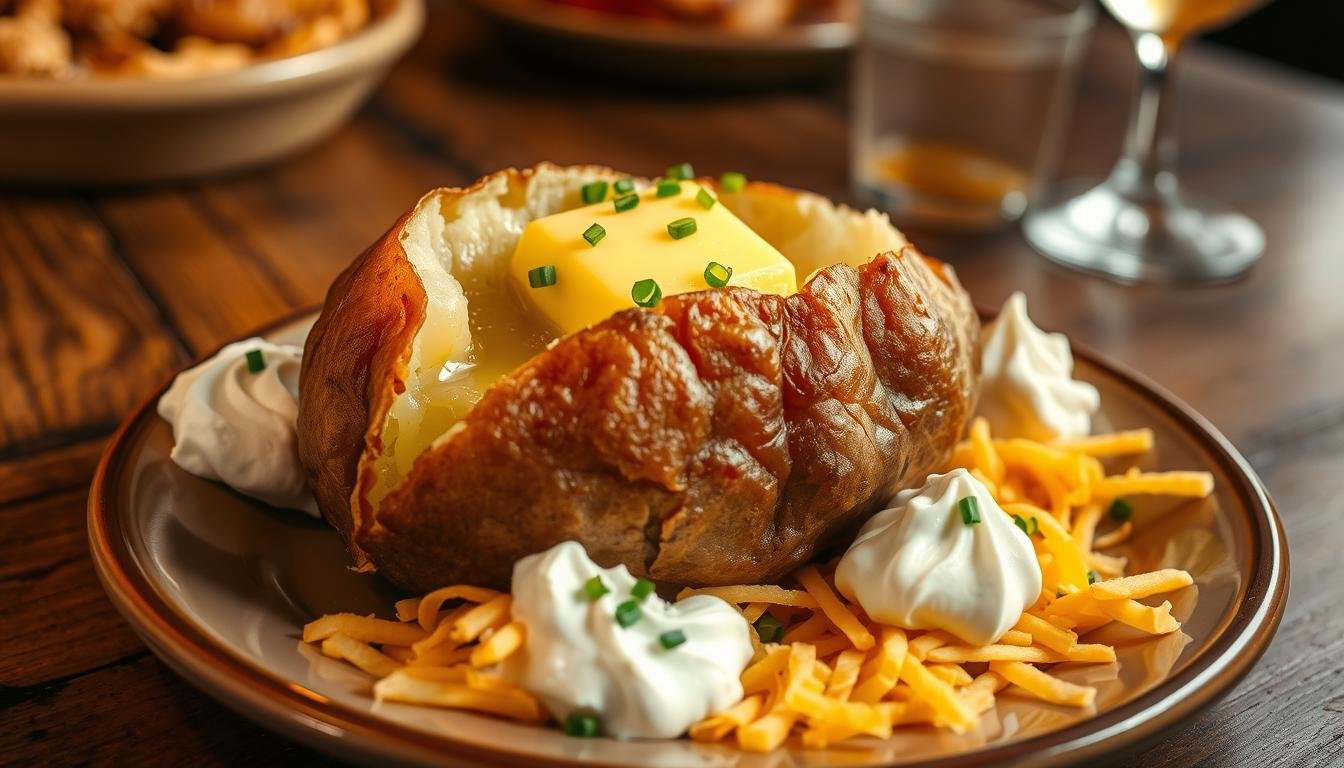
Have you ever wondered why a restaurant version of a humble tuber can taste so unforgettable?
I have spent years refining my approach to recreate that fluffy, crisp, and salty perfection. I promise this guide will show you the secret ingredient and the simple steps to make the same restaurant-style side at home.
My recipe focuses on texture and flavor so each potato matches the dish you expect. With a few easy techniques, you can save time and skip the trip to eat a top-quality side dish.
I write in plain terms and take you through the exact process that helps me impress guests and serve perfect baked potatoes every time.
Key Takeaways
- I reveal the secret that makes the skins crisp and the insides fluffy.
- You can recreate the restaurant experience in your own kitchen.
- The method saves time and avoids a restaurant visit.
- My step-by-step recipe helps you master this classic side dish.
- Follow simple tips to produce consistent, high-quality results.
The Secret to the Perfect Texas Roadhouse Baked Potato
https://www.youtube.com/watch?v=9IhwXsKnrR4
A simple swap—bacon fat for vegetable oil—transforms the skin into something unforgettable.
Coating each potato in rendered bacon fat gives the skin a deep, smoky note and a crisp texture that plain oil can’t match. I rub the fat over the skin, then sprinkle on flaky salt so each bite snaps before you reach the fluffy interior.
Many copycat attempts fail because people wrap their spuds in foil. I cook mine directly on the oven rack. That exposure lets the skin dry and crisp while the inside stays light and creamy.
“A customer claimed on Reddit that potatoes are coated in bacon fat and flakey salt before cooking.”
For the classic loaded version, I add butter, fresh sour cream, crumbled bacon, and high-quality cheddar cheese. Serve this side with a juicy steak and you have a restaurant-style dinner at home.
- Tip: Skip the foil to preserve crisp skin.
- Tip: Use good cheddar and fresh sour cream for the best flavor.
- Tip: Render bacon fat and save any extra for future use.
Essential Ingredients for Restaurant Quality Results
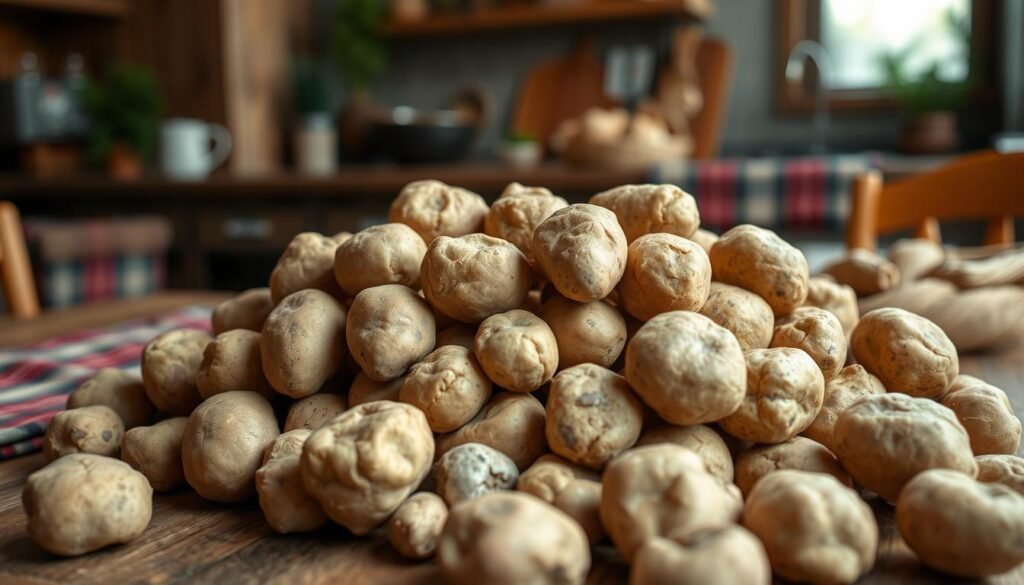
Choosing the right ingredients makes the difference between a good side and a restaurant-grade dish.
I use 4 russet baking potatoes of similar size so they finish at the same time. Even sizing avoids overcooking some while others remain firm.
Selecting the Right Russets
Pick firm russet tubers with dry skins and minimal blemishes. Similar weight and shape give consistent baking and a uniform fluffy interior.
The Importance of Bacon Fat
I prefer 1/4 cup of rendered bacon grease saved from frying bacon strips to coat each spud. That fat builds a crisp, savory skin you can’t get with plain oil.
If you don’t have bacon fat, use olive oil as a substitute. The flavor shifts slightly, but the coating still helps the skins crisp when baking.
- Use coarse kosher salt to mimic the restaurant’s chunky texture on the potato skin.
- Proper cooking of the fat ensures crispy skins and a soft interior.
- These simple ingredients—russets, fat, and salt—are all you need for restaurant-quality results.
Preparing Your Potatoes for the Oven
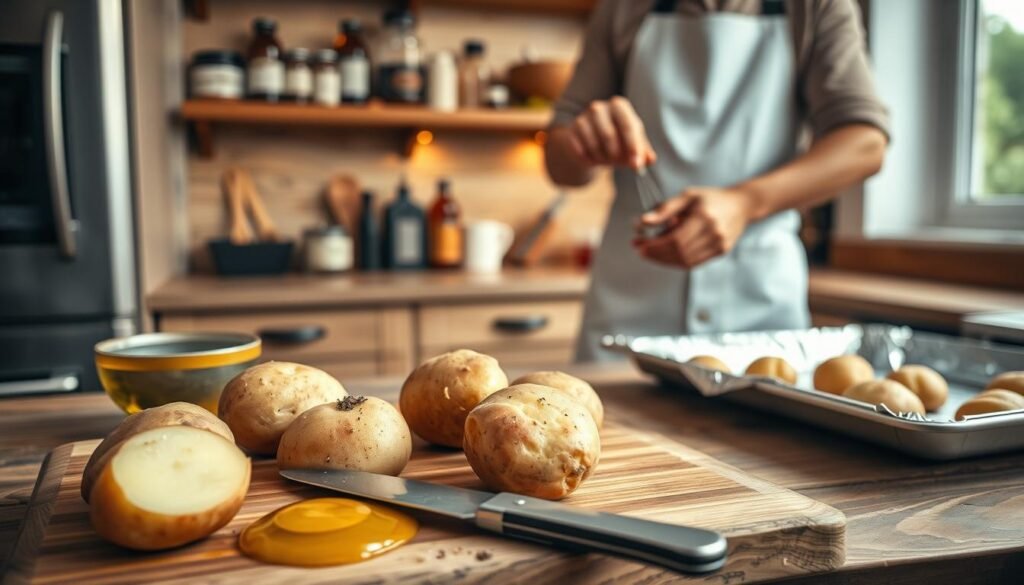
A careful clean and a few punctures change how a potato behaves in the oven.
Wash your russet potatoes under cold water and pat them dry with a paper towel. Dry skins help the bacon grease or olive oil cling to the surface so the skin crisps evenly.
Pierce each tuber several times with a fork or a paring knife. Those small holes let steam escape and prevent any sudden splits while baking.
Proper Cleaning and Piercing Techniques
I rub rendered bacon grease or olive oil over the whole surface, then sprinkle a generous layer of coarse salt on the potato skin. That combination creates the signature snap we want.
- Bake the potatoes directly on the oven rack for at least one hour to get crisp skins and a fluffy interior.
- If your fat is solid, place a small drip pan on the rack below to catch any rendered grease from the strips.
- This prep guarantees consistent results every time and saves you minutes of guessing during baking.
Mastering the Baking Process
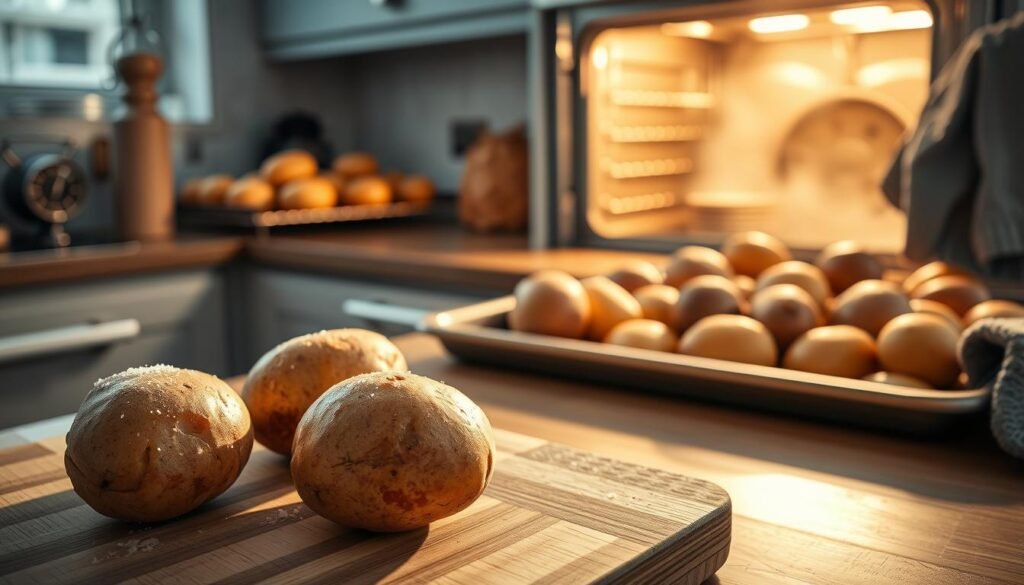
Start by preheating the oven to 425°F. That heat level is key to crisping the skin while the interior turns light and fluffy.
Place the russet potatoes directly on the oven rack so hot air circulates all around each tuber. This avoids the soggy result you get from wrapping in foil.
I bake medium potatoes for about an hour. Check them with a fork; they should slide in easily when done. Adjust time for larger or smaller specimens.
- Preheat to 425°F for best crisping.
- Bake ~60 minutes or until fork-tender; do not wrap in foil.
- Reheat leftovers by air frying briefly, then microwave for 1 minute.
Pay attention during that critical hour. Small steps—consistent oil or fat coating, coarse salt, steady oven temperature—make these recipes repeatable and reliable.
Creative Topping Ideas for Your Side Dish

A few smart toppings take an ordinary side and make it unforgettable. I like to mix classic and playful finishes so each plate suits the meal. Below are simple, reliable combos you can try in under minutes.
Classic Loaded Style
Butter, sour cream, cheddar cheese, and crispy bacon are the go-to choices for a loaded baked potato. I pile them on hot so the cheese melts and the sour cream loosens the interior.
- Add chives or parsley for freshness.
- Use flaky salt on the skin for contrast.
- A generous knob of butter finishes the dish.
Chili and Seafood Variations
For a savory twist, spoon hot chili or a spicy shrimp-and-crab sauce over the skin. Onions and grated cheese hold heat and add texture.
- Try chili, diced onions, and cheddar cheese.
- Or top with a zesty seafood sauce for steak nights.
- Reheat toppings briefly in the oven before serving.
Sweet Potato Alternatives
I enjoy a dessert-style sweet potato with honey cinnamon butter, mini marshmallows, and warm caramel sauce. To make the caramel, simmer butter, brown sugar, and honey until thick and pourable.
“A honey cinnamon butter elevates a sweet tuber into a memorable finish.”
- Loaded sweet potato ≈ 570 calories.
- Drizzle caramel sauce while warm for best texture.
- Try a sprinkle of cinnamon for depth.
Conclusion
Nailing this restaurant-style side at home takes a few focused steps and reliable ingredients.
I wrote this post so you can recreate a true texas roadhouse feel without the trip. Follow the recipe and you will get crisp skins, a fluffy interior, and fast results in about the right minutes.
Use rendered fat or good oil, real butter, fresh sour cream, sharp cheese, and crisp bacon to lift the dish. Skip the foil and bake the potatoes directly for consistent texture every time.
I hope the tips here boost your confidence at dinner. Try the method, tweak toppings, and tell me how your homemade baked potatoes turned out.
